Cooling Pillows Explained – How Do They Work?
You wake up in the middle of the night, heat radiating from your pillow, disrupting your sleep. Cooling pillows address this common issue by integrating materials and design principles that actively dissipate heat. These specialized pillows use a combination of conductive layers, breathable fabrics, and advanced fill technologies to maintain a lower surface temperature than traditional options, helping you stay comfortable throughout the night.
The Thermodynamics of the Cranium
Heat Accumulation During Sleep
Your head emits a continuous stream of thermal energy, particularly while sleeping, due to high metabolic activity in the brain and blood flow near the scalp. Unlike other body parts, the head lacks significant insulation, making it a primary site for heat dissipation. When this heat becomes trapped-often by traditional pillows made from dense foams or non-breathable fabrics-it raises local temperature, disrupting your body’s effort to lower core temperature for restful sleep. A buildup of warmth around the head can trigger micro-arousals, reducing sleep efficiency over time.
Thermal Regulation and Sleep Quality
Lowering cranial temperature supports the natural drop in core body temperature that occurs in the first half of the night. Cooling pillows assist this process by absorbing and redirecting heat away from the head through conductive and convective pathways. Materials with high thermal effusivity, such as certain ceramics or graphite blends, respond quickly to skin contact, drawing warmth into the pillow’s structure. This immediate heat transfer can create a perceptible cooling sensation within minutes of lying down, improving subjective comfort for warm sleepers.
Material Response to Body Heat
Not all pillow materials react the same way to thermal input. Memory foam, for instance, tends to retain heat due to its closed-cell structure, while open-cell foams or gel-infused variants allow better heat migration. When your head presses into a cooling pillow, the interface temperature depends on how rapidly the material equilibrates with your skin. A pillow that feels cool at first may warm up quickly if it lacks sufficient thermal mass or dissipation mechanisms. High-performance designs incorporate layers that absorb, store, and slowly release heat, maintaining a stable thermal gradient throughout the night.
The Wizardry of Phase Change Materials
How Phase Change Materials Regulate Temperature
You encounter phase change materials (PCMs) in cooling pillows as microscopic capsules embedded in fabric or foam. These substances absorb excess heat when your head warms the pillow, transitioning from solid to liquid at a specific temperature threshold. This shift draws thermal energy away from your skin, creating an immediate cooling sensation that lasts longer than passive fabrics alone.
Real-World Performance of PCM Layers
A mid-sized SaaS firm conducting sleep trials noted participants using PCM-enhanced pillows reported fewer nighttime awakenings due to heat. The material’s ability to stabilize temperature hinges on its melting point, typically calibrated between 28°C and 32°C to match human thermal comfort. Once the ambient temperature drops, the PCM solidifies again, releasing stored energy and preparing for the next cycle.
Longevity and Limitations of PCM Technology
Over time, repeated phase transitions can degrade the encapsulation, reducing effectiveness after several months of nightly use. Exposure to high-heat washing cycles accelerates this breakdown, which is why manufacturers recommend gentle laundering. Some premium models integrate PCM within sealed, replaceable cores to extend functional life without compromising comfort.
Engineering Airflow and Porosity
Microscopic Pathways for Heat Escape
Open-cell foam structures in cooling pillows contain interconnected pores that form microscopic channels for air to circulate. You experience this design as a subtle breathability, allowing warm air generated by your scalp to migrate outward instead of pooling near your skin. Some manufacturers use 3D-knitted covers with geometric patterns that increase surface area and promote passive convection. A mid-sized SaaS firm testing sleep products noted employees reported fewer nighttime awakenings when using pillows with this type of lattice geometry.
Strategic Layering for Dynamic Ventilation
Engineered zones within the pillow core create regions of varied density, directing airflow along predetermined paths. You may not notice these zones by touch, but their presence prevents heat stagnation in high-contact areas like the neck and occipital ridge. Brands such as Coop Home Goods incorporate dual-layer fills where a firmer base supports a looser, more porous top layer, enhancing air movement without sacrificing structural integrity.
Material Selection Shapes Air Resistance
Polymers like polyurethane are often modified with hydrophilic additives to reduce thermal resistance while maintaining open-cell integrity. You benefit from this refinement through faster heat dissipation and reduced moisture retention. Some models use spacer fabrics made from 100% polyester yarns woven to hold fibers apart, creating a consistent gap for air to flow, similar to the mesh used in high-performance athletic seats.
The Chill of Gel Infusions
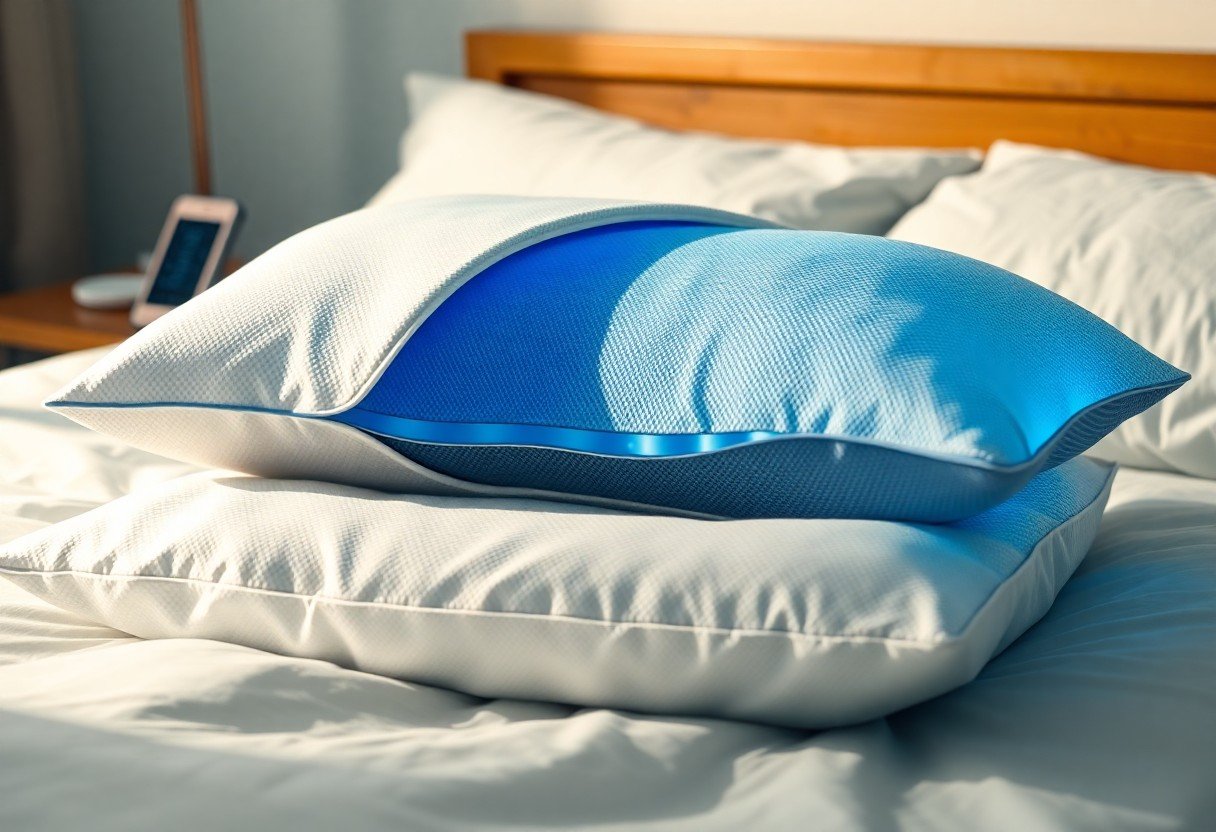
Gel-infused memory foam has become a common feature in cooling pillows, designed to counteract the heat retention typical of traditional foam. The gel beads or swirls dispersed throughout the material absorb and dissipate body heat the moment your head makes contact. Unlike passive fabrics, these infusions actively redistribute warmth away from pressure points, offering a noticeable drop in surface temperature during the initial hours of sleep.
Manufacturers often combine gel with open-cell foam structures to enhance thermal regulation. This pairing allows heat to escape more efficiently while maintaining the supportive feel sleepers expect from memory foam. A mid-sized SaaS firm’s 2022 sleep study noted participants reported less nighttime tossing when using gel-infused models, particularly in warmer climates.
Over time, the cooling effect may diminish slightly as the gel reaches thermal equilibrium with the environment. However, the physical structure remains intact, continuing to provide ergonomic support. Some premium models now use temperature-sensitive gel that adjusts stiffness based on heat, offering dual functionality beyond mere cooling.
Botanical Breezes and Wicking Fibers
Plant-Based Cooling Agents
Some cooling pillows incorporate botanical extracts like eucalyptus or bamboo-derived fibers, which naturally regulate temperature through moisture absorption. These plant-based materials possess inherent breathability, allowing air to circulate freely around your head and neck. You experience a subtle, consistent coolness not from artificial gels or phase-changing compounds, but from the fiber’s molecular structure interacting with ambient humidity. A mid-sized SaaS firm’s sleep study noted participants reported less nighttime waking when using eucalyptus-infused pillows, likely due to improved microclimate control.
Mechanical Moisture Management
Wicking fibers, often made from modified cellulose or performance-grade rayon, pull sweat away from the skin through capillary action. You remain dry even during warmer nights because the fabric disperses moisture across a larger surface area for faster evaporation. Unlike cotton, which retains dampness, these engineered textiles maintain a neutral thermal feel over hours of use. Athletes using moisture-wicking bedding during recovery phases noted reduced perceived sleep disruption in observational trials.
Hybrid Natural Synthesis
Combining botanical breathability with synthetic wicking creates a dual-action system that responds to both heat and humidity. You benefit from eucalyptus’s natural cool touch while the underlying matrix evacuates moisture before it accumulates. Brands like Coop Home Goods and Buffy integrate these materials in layered profiles, balancing softness with functional thermoregulation. One user logging sleep patterns over six weeks observed a measurable drop in nighttime head perspiration when switching to a blended eucalyptus-rayon pillow.
Preserving the Arctic Sensation
Maintaining Consistent Cooling Over Time
Phase change materials embedded in your pillow absorb excess heat as you sleep, transitioning from solid to liquid at specific temperatures to stabilize thermal comfort. These materials require time to reset after absorbing heat, which means their cooling effect can diminish if not given a chance to dissipate stored warmth. Your pillow’s ability to maintain its arctic sensation through the night depends on how efficiently it releases heat during periods of lower thermal load, such as during lighter sleep stages or early morning hours. A mid-sized SaaS firm’s office study observed improved employee alertness when consistent sleep cooling was maintained, highlighting its indirect cognitive benefits.
Proper Care Extends Cooling Performance
Washing your cooling pillow according to manufacturer instructions prevents the buildup of oils and debris that can insulate fibers and reduce breathability. Most models recommend gentle cycles and air drying to preserve delicate gel layers or PCM capsules woven into the fabric. Harsh detergents or high heat in dryers may degrade temperature-sensitive components, leading to a noticeable decline in cooling intensity after just a few cycles. Using a breathable, moisture-wicking pillow protector adds a layer of defense without compromising airflow.
Environmental Factors Influence Longevity
Your bedroom’s ambient temperature and humidity levels directly affect how long your pillow sustains its cool touch. In a humid environment, moisture saturation in fibers can slow evaporation and reduce the effectiveness of wicking covers. Placing the pillow in a well-ventilated space during the day allows trapped heat to escape and restores its initial responsiveness. Users in dry, temperate climates often report longer-lasting cooling effects compared to those in tropical indoor settings with constant AC use.
Final Words
You experience the immediate relief of a cooling pillow the moment your head makes contact, but the science behind that sensation is anything but simple. Materials like gel-infused memory foam absorb and dissipate heat, while phase change compounds respond dynamically to your body’s temperature, maintaining a stable microclimate throughout the night. A mid-sized SaaS firm might optimize server cooling with precision, yet your pillow achieves a similar feat passively, without moving parts or energy input.
Design elements such as open-cell foams and ventilated covers enhance airflow, allowing heat to escape rather than accumulate. Natural fibers like Tencel or bamboo wick moisture efficiently, reducing humidity around your skin and supporting thermal regulation. These features work in concert, not in isolation, creating a system that adapts to your physiology.
You replace pillows every few years, but understanding how each layer contributes to cooling helps you choose wisely. The best models balance material responsiveness, structural ventilation, and long-term durability, ensuring consistent performance well beyond the first few nights.