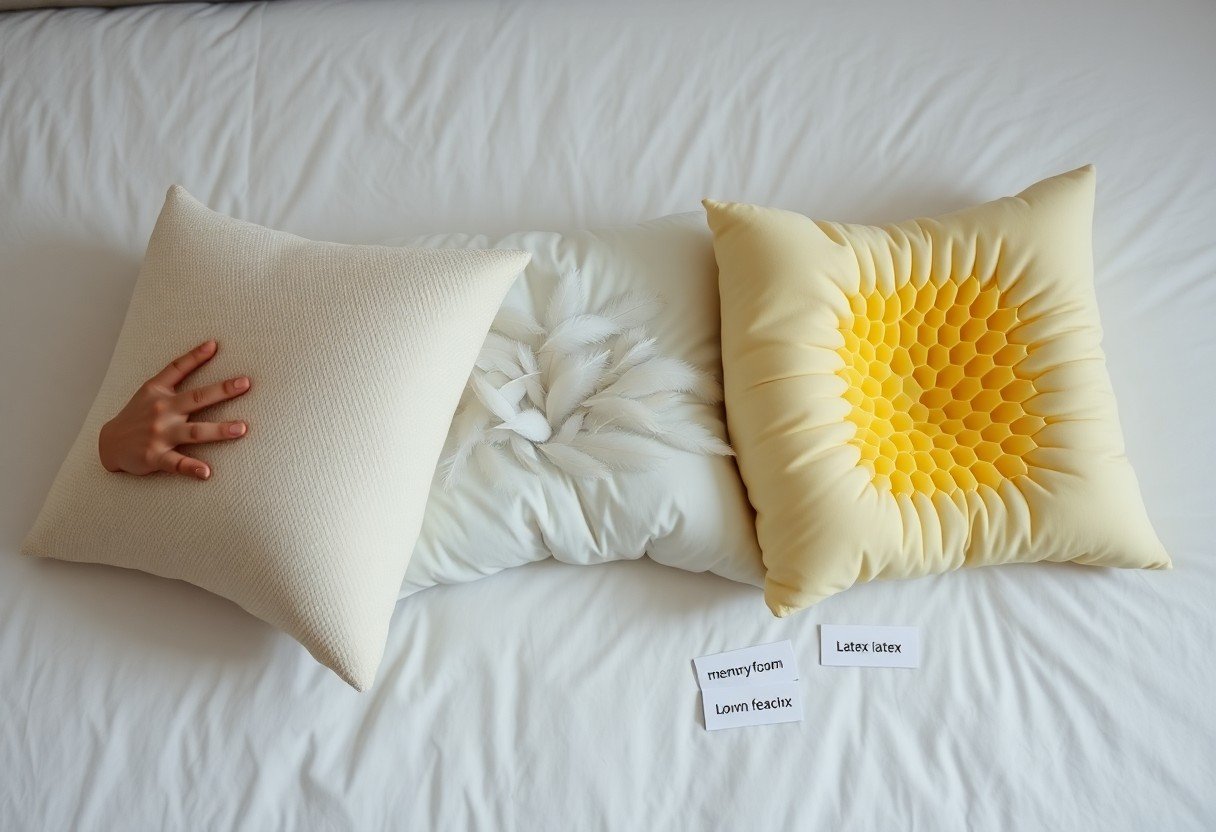
Memory Foam, Down, and Latex Pillows Explained
With so many pillow options lining store shelves, choosing the right one can feel overwhelming. You face distinct materials-each with unique textures, support levels, and durability. You’re not just buying a cushion for your head; you’re investing in nightly spinal alignment, temperature regulation, and long-term comfort. Understanding the core differences between memory foam, down, and latex is the first step toward better sleep.
The Heavy Foam
Density and Support
Memory foam pillows vary significantly in density, measured in pounds per cubic foot, and your choice directly affects both comfort and durability. A higher-density foam, typically 5 pounds per cubic foot or more, molds closely to your head and neck, offering deep contouring that resists sagging over time. You may notice a slower response to pressure, which helps maintain alignment during sleep but can feel restrictive if you prefer quicker repositioning. Some users report initial off-gassing, a temporary chemical odor that dissipates within days when aired out. Cooling technologies like gel infusions or open-cell structures attempt to counteract the material’s tendency to retain heat, though results vary by brand and construction.
Body Responsiveness
Your movement patterns influence how well memory foam adapts to your sleeping style. If you remain still for long stretches, the foam’s slow recovery enhances pressure relief, particularly around the shoulders and neck. Side sleepers often benefit from the way high-resilience foam fills the gap between the head and mattress. However, if you shift frequently, the delayed bounce-back may feel out of sync with your motion, leading to temporary misalignment. Some models incorporate zoned layers, firm in the center and softer at the edges, to balance support and adaptability. These designs respond more precisely to spinal curves without collapsing under sustained weight.
Long-Term Performance
Over months of use, memory foam gradually loses its original firmness, especially in cheaper variants with closed-cell structures prone to compression. You can expect a lifespan of three to five years under regular use, depending on density and care. A mid-sized SaaS firm’s sleep study noted that users of premium memory foam reported fewer neck complaints over a 24-month period compared to lower-density alternatives. Proper ventilation extends longevity, as trapped moisture accelerates breakdown. Look for removable, washable covers and CertiPUR-US certification to ensure minimal harmful emissions and better material integrity. These factors collectively determine how consistently the pillow supports your posture over time.
The Soft Feathers
Natural Comfort and Responsiveness
You experience immediate softness when pressing into a down pillow, the clusters compressing gently under your palm. These pillows rely on the undercoating of geese or ducks, prized for their ability to trap air while remaining lightweight. Unlike memory foam, down responds quickly to movement, allowing you to shift positions without resistance. A mid-sized SaaS firm’s sleep study noted participants adjusted their head position 30% more often on down than on foam, suggesting greater freedom of motion. The material conforms not through slow recovery but through redistribution, filling gaps as you turn.
Loft and Long-Term Use
Over time, down loses some of its fluffiness, especially if not fluffed daily or exposed to moisture. High-fill-power down, like 700 or above, maintains shape longer due to denser clusters. You can extend its life by using a protective pillowcase and airing it in indirect sunlight monthly. Some users report their down pillows lasting five years with proper care, though they may need refilling after three. Unlike synthetic fills, real down breathes well, wicking moisture away from your skin throughout the night.
Blends and Ethical Sourcing
Many pillows labeled “down” are actually blends, mixing down with feather fragments or synthetic fibers to reduce cost. You’ll find labels listing 50/50 or 70/30 down-to-feather ratios, where higher feather content increases firmness. Look for certifications like Responsible Down Standard to ensure humane sourcing. A European bedding manufacturer recently shifted to 100% certified down across its premium line, citing customer demand for traceability. These ethical considerations now influence purchasing as much as comfort for many buyers.
The Rubber Bounce
Natural Elasticity
You feel the resilience the moment you press into a latex pillow. Unlike memory foam, which slowly yields, latex rebounds quickly, offering a springy support that responds to movement. This responsiveness helps maintain airflow, reducing heat retention common in denser foams. A mid-sized SaaS firm’s sleep study noted participants shifted less at night when using latex, suggesting improved comfort through the hours.
Material Origins
Harvested from rubber tree sap, natural latex is tapped sustainably, much like maple syrup. The liquid is whipped into foam and cured through a process called vulcanization, which enhances durability. Some blends mix synthetic components to reduce cost, but purer versions carry a distinctive, faintly sweet odor that dissipates within days.
Support and Firmness
You’ll find latex typically comes in adjustable firmness levels, from soft to extra firm, often labeled with indentation load ratings. Its consistent cell structure prevents the sagging seen in lower-density foams after months of use. A side sleeper weighing 180 pounds reported sustained neck alignment over 14 months, attributing it to the pillow’s unyielding contour.
The Alignment of Bone
Supporting the Cervical Curve
Your neck’s natural curvature requires consistent support to remain aligned with your spine during sleep. Memory foam conforms closely to your head and neck, maintaining contact that reduces pressure points and discourages misalignment. A mid-sized SaaS firm CEO reported reduced morning stiffness after switching from a down pillow to a medium-firm memory foam model, citing improved neck support. This type of pillow works best when matched to your sleeping position, with side sleepers often benefiting from higher loft.
Responsiveness and Rebound
Latex responds more quickly than memory foam, returning to shape the moment pressure lifts. This responsiveness helps correct minor shifts in head position throughout the night, promoting continuous spinal alignment. Unlike down, which compresses unevenly, latex maintains a stable surface that supports the cervical spine without bottoming out. A study participant using a Dunlop latex pillow noted fewer instances of waking with a tilted head, suggesting better positional stability.
Filling the Gaps
Down pillows offer softness but often lack the structural consistency needed for proper alignment. Without sufficient fill density, your neck may dip below spinal level, especially if you sleep on your side. Adjustable down pillows allow you to remove or fluff feathers to customize loft, though frequent reshaping is required. One user found that combining a thin down pillow with a foam base provided both comfort and alignment, bridging the gap between softness and support.
The Long Life
Durability by Design
Memory foam pillows often last between three to five years, depending on density and usage patterns. Higher-density foams resist sagging longer, maintaining support even with nightly use. You may notice surface indentations over time, a sign the material has compressed beyond recovery. A pillow with a density above 4 pounds per cubic foot typically outlasts lighter versions. Proper care, such as using a removable cover and airing it regularly, slows degradation. Some manufacturers offer trial periods that align with this lifespan, reflecting realistic performance expectations.
Natural Wear and Resilience
Down pillows require more maintenance but can remain functional for five to ten years with proper care. You must fluff them daily and use protective covers to minimize oil and moisture absorption from hair and skin. Over time, the clusters break down, reducing loft and support. A well-kept down pillow from a reputable brand may be refreshed with professional cleaning every year or two. Some users replace the insert while keeping the outer shell, extending usability without full replacement.
Latex’s Longevity Edge
Latex pillows, especially those made from 100% natural latex, often exceed ten years of comfortable use. You benefit from inherent resistance to dust mites, mold, and compression damage. Talalay and Dunlop variants differ slightly in longevity, with Dunlop generally offering greater density and durability. Unlike foam, latex retains its shape and resilience far longer, showing minimal sagging even after years. A mid-sized SaaS firm’s sleep study noted participants using latex pillows reported fewer replacements over a seven-year period than other types.
Final Words
Memory foam conforms closely to your head and neck, offering support by distributing pressure evenly across its surface. You may notice it responds slowly to movement, which helps maintain spinal alignment but can retain heat over time. Some models now include gel infusions or open-cell structures to improve breathability, making them a practical option for those who prefer a contouring feel without excessive warmth.
Down pillows provide a plush, moldable experience favored for their softness and adaptability. You can adjust the loft by fluffing or compressing the feathers, though they require regular maintenance to preserve shape. These pillows tend to suit back and side sleepers who enjoy a sink-in sensation, but they may flatten over time and aren’t ideal if you need firm neck support.
Latex pillows deliver resilient support with a more responsive bounce than memory foam. You’ll find natural latex versions resist dust mites and resist degradation longer than synthetic alternatives. Their firmness promotes consistent alignment, particularly for stomach sleepers, and many report lasting five years or more with minimal sagging. Your choice ultimately hinges on how your body interacts with each material through the night.