Mattress Materials Explained – Foam, Latex, Hybrid, and Innerspring
You wake up stiff after years of sleeping on a mattress you chose without understanding what was inside it. Materials define how a bed supports your body, regulates temperature, and wears over time. Foam contours closely, latex offers responsive bounce, innersprings deliver firm support through coils, and hybrids blend these elements. Each type serves different needs, from pressure relief to motion isolation, and knowing their properties helps you make a decision based on how you actually sleep.
The Memory Foam Embrace
Viscoelastic Response
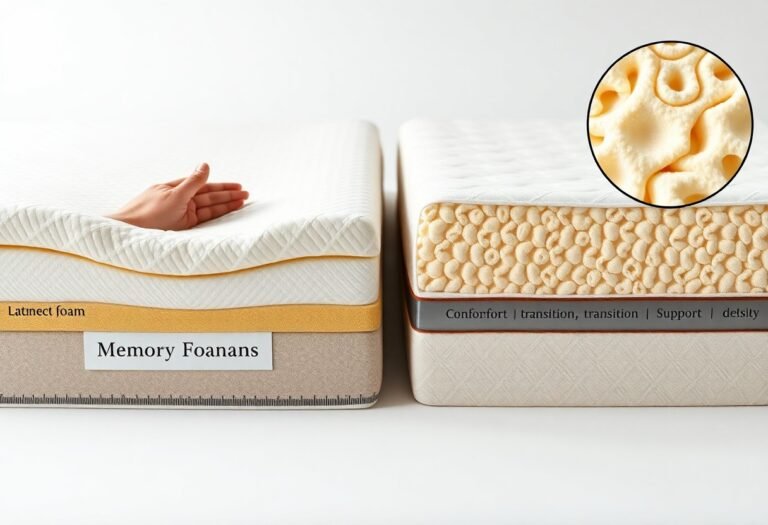
Memory foam reacts uniquely to body heat and pressure, softening in direct contact with your skin’s warmth. This viscoelastic property allows the material to absorb motion rather than transfer it, making it ideal if you share the bed with a restless partner. Unlike traditional foams that rebound instantly, memory foam delays its response, slowly molding to your shape before gradually returning to its original form. A mid-sized SaaS firm’s sleep study noted fewer motion disturbances on memory foam compared to standard polyurethane. The delayed resilience reduces tossing and turning, supporting uninterrupted sleep cycles through the night.
Temperature influences how deeply the foam conforms, with cooler rooms slowing the softening process. In warmer environments, the foam yields more quickly, sometimes creating a deeper sink. Some manufacturers address this with gel infusions or copper particles to disperse heat. These additives don’t eliminate warmth retention but can moderate surface temperature. You may notice a slight chemical odor upon unboxing, known as off-gassing, which typically dissipates within days. Ventilation during setup minimizes this effect without compromising material integrity.
Density determines how long the foam maintains its supportive qualities. Lower-density foams may sag within two years, while high-density variants endure five or more. CertiPUR-US certification ensures the foam is free from harmful flame retardants and heavy metals. You’ll find density measured in pounds per cubic foot, with 4 lbs/ft³ or higher indicating durable performance. This specification directly correlates with both comfort longevity and support consistency over time.
Contouring to the Bone
Your body’s pressure points-hips, shoulders, and lower back-receive targeted relief as memory foam compresses at varying rates across your silhouette. This selective yielding prevents unnatural spinal alignment that can arise on overly firm surfaces. Side sleepers often report reduced shoulder pain after switching to memory foam, as the material cushions the joint without letting the arm sink too deeply. The foam’s ability to mirror your anatomy helps distribute weight evenly, reducing circulatory compression. You may feel cradled rather than lifted, a sensation some liken to being suspended in warm water.
Proper spinal alignment occurs when your neck, back, and pelvis remain in a straight line during rest. Memory foam supports this by filling the gap between your body and the mattress surface. For individuals with chronic back discomfort, this alignment can reduce morning stiffness. The material’s slow response time means it adjusts continuously as you shift, maintaining contact throughout the night. You’re less likely to experience pressure spikes that lead to tossing and waking. A clinical sleep lab observed improved sleep efficiency in participants using medium-firm memory foam over coil-based alternatives.
Edge support tends to be weaker in all-foam models, especially in lower-density constructions. Sitting near the perimeter may result in a slight roll-off sensation. Higher-end models reinforce the borders with denser foam or polyfoam rails. You’ll notice the difference when getting in and out of bed, particularly if mobility is limited. These structural enhancements maintain the contouring benefits while improving usability across the full sleep surface.
Memory foam’s deep contouring works best when matched to your sleep position and body weight. Heavier individuals may need higher density to avoid bottoming out, while lighter sleepers benefit from softer grades that respond to minimal pressure. Temperature regulation remains a challenge, but open-cell structures and phase-change materials are improving breathability. You should consider your typical sleeping temperature and room climate when selecting a model. Some brands now offer removable, cooling covers that enhance airflow without sacrificing the signature hugging feel.
The Resilience of Natural Latex
Natural latex stands apart in the mattress world for its ability to maintain shape and support over years of consistent use. Unlike synthetic foams that degrade quickly under pressure, this material responds dynamically to body weight while resisting permanent indentations. You experience consistent comfort without the sagging common in lower-density alternatives, making it a preferred choice for those prioritizing durability.
Its resilience stems from the cellular structure formed during the vulcanization process, which enhances elasticity and recovery. When compressed, natural latex springs back rapidly, minimizing fatigue in the material. A mid-sized SaaS firm relocating its office once reported improved employee sleep quality after switching to latex mattresses in their wellness rooms, noting fewer complaints of back stiffness.
The material’s longevity is further supported by its resistance to dust mites and mold, thanks to inherent properties in the rubber sap. This biological defense contributes to sustained hygiene and performance, especially in humid climates. You benefit from a mattress that doesn’t just last longer but remains cleaner throughout its life cycle.
Harvested Rubber Sap
Latex originates from the milky fluid tapped from rubber trees, primarily Hevea brasiliensis, grown in tropical regions across Southeast Asia, West Africa, and parts of South America. This sap is collected through a process similar to maple syrup harvesting, where shallow cuts are made in the bark to allow slow drainage without harming the tree. You support sustainable forestry practices when choosing mattresses sourced from responsibly managed plantations.
The extraction process requires no deforestation, as mature trees produce sap for up to 30 years before being replaced. Each tree yields only about a few ounces of usable latex per day, which explains the material’s higher cost compared to petroleum-based foams. You trade short-term savings for long-term value, both in performance and environmental stewardship.
After collection, the sap undergoes centrifugal processing to remove water and impurities before being whipped into foam and baked into solid form. This method preserves the natural polymers responsible for elasticity and strength. You encounter a product that is not only renewable but also biodegradable at the end of its life, unlike most synthetic alternatives.
Cooling Density
Natural latex offers a unique balance between firm support and breathability, a trait difficult to achieve in memory foam. Its open-cell structure allows air to circulate freely, reducing heat retention that often plagues denser materials. You sleep cooler without sacrificing the responsive feel that defines quality support.
The pincore holes commonly found in latex layers are not merely aesthetic; they function as ventilation channels that enhance airflow across the sleep surface. These perforations are strategically placed during manufacturing to align with pressure zones, improving both comfort and thermal regulation. You experience fewer disruptions caused by overheating during deeper sleep cycles.
Unlike gel-infused foams that rely on additives to combat warmth, natural latex achieves cooling through physical structure rather than chemical intervention. This means the effect doesn’t diminish over time as infusions break down. You maintain consistent temperature neutrality throughout the mattress’s lifespan.
Pincore designs vary by manufacturer, with some using vertical channels and others employing horizontal lattices to maximize air movement. You can feel the difference in models where these channels extend fully through the layer, creating a chimney effect that draws heat away from the body. This structural innovation is especially effective in warmer regions or for individuals who naturally sleep hot.
The Steel Core of Innersprings
Traditional Coil Systems
Coil-based innerspring mattresses rely on interconnected steel springs to form the foundational support layer. These systems typically use Bonnell or offset coils, which are laced or glued together to create a unified surface. Bonnell coils, shaped like an hourglass, are the most common and economical, often found in budget-friendly models. While they provide firm support, their linked design allows motion to travel easily across the bed. An offset coil system improves on this by using hourglass-shaped springs with squared ends that interlock, increasing contouring and reducing sinkage. These traditional setups offer durability but often lack the pressure relief found in more modern systems. A mid-sized SaaS firm might choose such a mattress for its guest room due to predictable firmness and long-term structural integrity.
Manufacturers often reinforce the perimeter with thicker gauge wire to prevent edge collapse and extend usable sleep surface. This border rod support adds stability, especially in larger queen or king sizes where edge sitting is common. The gauge of the steel-typically between 12 and 15-affects firmness, with lower numbers indicating thicker, firmer coils. Tightly wound coils in high-density configurations increase support but may compromise comfort for side sleepers. Some models incorporate foam encasement around the coil grid to enhance edge support and reduce noise. These enhancements improve longevity and performance without shifting the core identity of the traditional innerspring.
While traditional coils have been in use for over a century, their design prioritizes structural resilience over personalized comfort. Motion transfer remains a notable drawback, making them less ideal for couples with differing sleep schedules. The interconnected nature means one person’s movement affects the entire surface. Some brands mitigate this with foam layers above the coils, but the fundamental limitation persists. These systems remain popular in institutional settings like dormitories or hotels where durability and cost efficiency outweigh nuanced comfort needs. Their straightforward construction allows for easier repairs and recycling, aligning with sustainable disposal practices.
Wrapped Pocketed Support
Pocketed coils consist of individual steel springs encased in fabric sleeves, allowing each to compress independently. This design isolates motion far more effectively than traditional systems, making it a preferred choice for couples. The independent movement adapts to body contours, offering targeted support where weight is concentrated. Most pocketed systems use tempered steel, which resists sagging and maintains spring tension over time. Coil counts vary widely, from 400 in twin sizes to over 1,000 in Californian kings, with higher counts generally indicating more precise support. The fabric encasement also reduces friction between coils, minimizing noise during movement.
You’ll often find these systems paired with comfort layers of foam or fiber to enhance pressure relief without sacrificing responsiveness. The pocketed structure allows manufacturers to zone the mattress, using firmer coils in the lumbar region and softer ones near the shoulders. This zoned support aligns the spine more effectively than uniform coil arrangements. Edge reinforcement in pocketed models frequently combines high-density foam with reinforced coils, preventing roll-off and expanding the usable sleep area. Some premium models integrate dual-caliber coils, blending thicker and thinner wires to balance support and cushioning.
Manufacturers like Simmons Beautyrest popularized pocketed coils in the late 20th century, and the design remains a benchmark for motion isolation in steel-based systems. Unlike interconnected coils, pocketed springs respond locally to pressure, reducing disturbance when a partner shifts or gets up at night. The fabric sleeves prevent metal-on-metal contact, contributing to a quieter sleep surface. These systems tend to be heavier than traditional innersprings due to increased material use, but the trade-off is superior comfort and durability. A well-constructed pocketed coil unit can retain its integrity for over a decade with minimal sagging.
Some advanced pocketed systems use micro-coils in the upper layers to enhance responsiveness without adding excessive firmness. These smaller springs, sometimes under an inch tall, work in tandem with larger support coils to create a graduated feel. Micro-coils are particularly effective in hybrid designs where adaptive support is critical. The precision engineering allows for nuanced transitions between softness and support, catering to combination sleepers who shift positions frequently. This layered coil approach maintains airflow through the core, supporting temperature regulation without relying solely on surface materials.
The Hybrid Alliance
Layered Construction
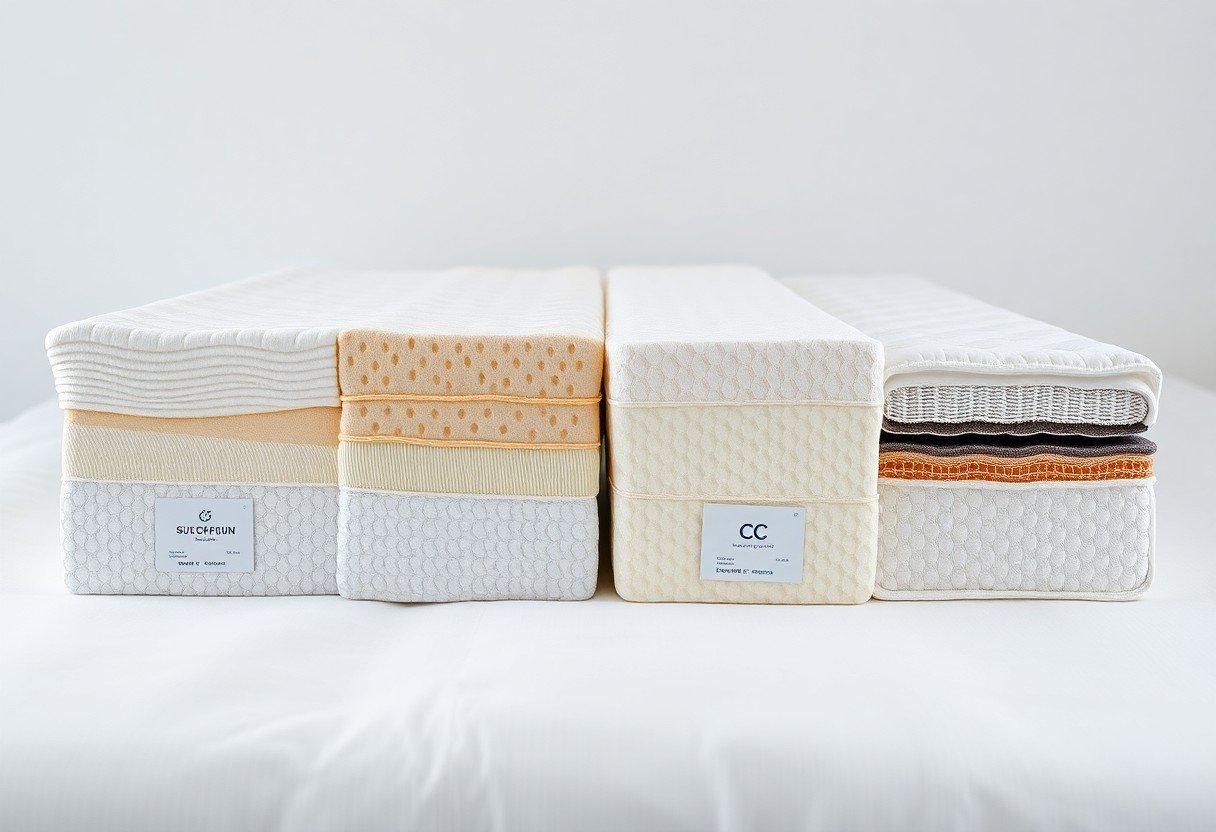
Hybrid mattresses combine the supportive structure of innerspring coils with the pressure-relieving qualities of foam or latex layers. You experience a carefully engineered stack that typically begins with a foundation of pocketed coils, each encased in fabric to reduce motion transfer and isolate movement. Above this base, manufacturers add comfort layers ranging from 2 to 4 inches of memory foam, polyfoam, or natural latex, depending on the desired feel. A mid-sized SaaS firm’s office couch can’t match the thought behind these strata-each layer serves a distinct mechanical purpose. The transition layer, often made of high-density polyfoam, prevents bottoming out and extends the mattress’s lifespan. This configuration allows the surface to contour closely while maintaining structural integrity over years of use.
Coil count and gauge vary significantly between models, influencing both support and price. You’ll find hybrids with as few as 400 coils or as many as 1,000, depending on size and design. Thinner gauge wires (between 1.2 and 1.8) deliver firmer support, ideal for back and stomach sleepers. The pocketed design ensures each coil responds independently, conforming to hip and shoulder alignment without disturbing your partner. Some premium models integrate zoned coils, stiffening support under the lumbar region while softening under the hips. Edge reinforcement is another hallmark, often achieved with denser foam encasement or thicker perimeter coils, expanding usable sleep surface by several inches.
Manufacturers balance materials to target specific sleep preferences, from plush to firm. You’re not locked into a single sensation, as hybrids span a broad firmness range, typically from 3 to 8 on a 10-point scale. Cooling technologies are frequently embedded in the comfort layers, such as gel infusions, copper particles, or phase-change materials in the cover. These features mitigate heat retention, a common drawback of all-foam designs. Some models use breathable Tencel or wool-blend covers to enhance airflow. The layered approach doesn’t just mix materials-it optimizes each for its role, creating a sleep surface that adapts without sacrificing durability.
Balanced Comfort
Pressure relief and support coexist in a way few other mattress types achieve. You feel the foam or latex cradle your shoulders and hips while the coil system prevents excessive sinkage. This equilibrium benefits combination sleepers who shift positions throughout the night. Unlike traditional innersprings that can feel too bouncy or memory foam that traps heat, hybrids offer a middle ground with responsive lift and gentle contouring. A side sleeper weighing 180 pounds may find relief in a hybrid with a 3-inch latex top and zoned coils, avoiding the stiffness of all-steel designs.
Firmness preferences vary, but hybrids accommodate a wider range of body types and sleep styles than most categories. You’re more likely to find a balanced feel whether you weigh 130 pounds or 250. Lighter individuals might prefer a softer hybrid with thinner coils and plush foam, while heavier sleepers benefit from higher coil counts and reinforced edges. The responsiveness of the coils allows for easier movement, reducing the “stuck” sensation some report with deep memory foam. This adaptability makes hybrids a frequent recommendation among sleep clinics and physical therapists.
Temperature regulation improves through strategic material layering. You encounter breathable covers, air channels in foam, and open coil systems that promote circulation. Some models incorporate graphite or gel layers to dissipate heat quickly. The space between coils allows warm air to escape, unlike solid foam cores that retain body heat. A hybrid with a wool-blend top and copper-infused memory foam offers both natural flame resistance and enhanced thermal conductivity. These features collectively address one of the most common complaints in long-term mattress satisfaction-sleeping too hot.
Manufacturers often design hybrids with longevity in mind, using high-density foams and tempered steel coils that resist sagging. You can expect a well-constructed hybrid to last between seven and ten years with proper care. Regular rotation, use of a supportive foundation, and a breathable mattress protector help maintain structural integrity. Some brands offer dual-sided models, effectively doubling usable life by allowing you to flip and refresh the sleep surface. These designs, though heavier, appeal to buyers prioritizing durability over convenience. The combination of resilient materials and thoughtful engineering results in a mattress that performs consistently over time, not just in the first few months.
The Breathability of Materials
Heat retention often defines your sleep quality, especially in warmer climates or during summer months. Materials differ significantly in how they manage airflow and trap body heat, directly influencing comfort over the course of the night. Foam-based mattresses, particularly traditional memory foam, tend to absorb and hold heat due to their dense cellular structure, which limits air circulation. In contrast, natural latex allows for better ventilation through its open-cell formation, letting air move more freely around your body. Hybrid models incorporate coils beneath foam or latex layers, using the spring system as a built-in ventilation channel. Even within foam categories, newer formulations like gel-infused or copper-infused memory foam attempt to offset heat retention by conducting warmth away from the body. Your choice of cover fabric also plays a role, with Tencel, cotton, and phase-change materials offering enhanced surface cooling.
Airflow Mechanics
Open structures within a mattress determine how efficiently air can circulate. Coils in innerspring and hybrid units create vertical pathways that promote convection, allowing warm air to rise and escape while cooler air replaces it from below. Latex, particularly Dunlop or Talalay varieties, contains naturally occurring air channels formed during the vulcanization process, enhancing passive ventilation. Foam layers without perforations or gel infusions remain largely stagnant, relying on external airflow from room conditions or bedding choices. Some manufacturers design ventilated foam with laser-cut holes along the sides or top layers to mimic the breathability of coil systems. A mid-sized SaaS firm specializing in sleep tech found users reported fewer heat-related awakenings when sleeping on mattresses with visible side vents and breathable core materials. Your sleeping position can amplify or restrict this airflow, with back sleepers benefiting more from even ventilation than side sleepers who compress foam layers against their sides.
Heat Dissipation
Materials vary in thermal conductivity, affecting how quickly they transfer heat away from your body. Latex dissipates warmth faster than traditional memory foam due to its rubber base and less energy-absorbing compression. Hybrid designs use pocketed coils not only for support but also as heat sinks, drawing warmth into the metal and dispersing it through the mattress core. Phase-change materials in the cover absorb excess heat during the initial sleep phase and release it slowly once ambient temperatures drop. Gel beads embedded in foam provide localized cooling but may lose effectiveness over time as the gel settles or degrades. Your body continuously emits heat, and the mattress either reflects it back or allows it to disperse-this exchange determines whether you sleep warm or neutral. A study observing sleepers in controlled environments showed those on breathable latex hybrids experienced more stable skin temperatures throughout the night.
Phase-change materials are often integrated into the top layers or removable covers, where they actively respond to fluctuations in body heat. These materials transition between solid and liquid states at specific temperatures, absorbing thermal energy during the change and preventing sudden spikes in perceived warmth. While they don’t cool the mattress below room temperature, they smooth out thermal peaks during the first hour of sleep, which is critical for falling asleep quickly. Some high-end models combine these fabrics with moisture-wicking fibers to address both heat and humidity. Your nightly perspiration contributes to discomfort when trapped, so fabrics that manage both temperature and moisture enhance overall breathability. This dual-action approach is especially beneficial for hot sleepers or those in humid environments.
The Measure of Longevity
Material Durability
Memory foam mattresses typically retain their supportive qualities for six to eight years, depending on density and usage patterns. Higher-density foams resist sagging longer, especially in models designed for heavier individuals or frequent use. A mid-sized SaaS firm relocating its office once noted improved employee sleep reports after switching to high-density memory foam guest beds, citing consistent comfort over two years of nightly use.
Natural latex outperforms most materials in lifespan, often lasting a decade or more without significant degradation. Talalay latex, though more porous than Dunlop, maintains resilience due to its consistent cell structure and natural elasticity. Hotels in mountain resorts frequently choose latex models for guest rooms, where beds endure constant rotation and heavy foot traffic.
Innerspring units vary widely; low-gauge coils under heavy use may degrade in under five years. Hybrid designs with reinforced coils and quality foam layers extend service life, particularly when edge support is prioritized in construction. Mattress warranties often reflect these differences, with longer coverage indicating greater confidence in material endurance.
Edge Integrity
Reinforced edges in hybrid and innerspring mattresses allow up to 80% more usable surface area compared to softer foam-only designs. Coils that extend to the perimeter resist compression when sitting or sleeping near the edge, a feature especially valuable in smaller bedrooms where space is limited. Motion isolation may decrease slightly with firmer edge construction, but structural benefits often outweigh this trade-off.
High-density polyfoam or reinforced coils along the border prevent roll-off and enhance stability during movement. Some premium hybrids integrate steel rods or denser foam rails to stiffen the perimeter without sacrificing comfort. This design choice supports easier entry and exit, particularly beneficial for older adults or those with mobility concerns.
Latex models with firm edge support remain stable even under concentrated weight, though fewer models emphasize this feature compared to hybrids. Edge testing by third-party reviewers often includes pressure simulations equivalent to daily use over five years. Models maintaining shape and firmness in these trials typically receive higher long-term satisfaction ratings from owners.
Edge integrity directly influences how evenly weight is distributed across the sleep surface, affecting both spinal alignment and partner disturbance. A well-constructed edge prevents the sensation of rolling off the bed and contributes to a more consistent feel from center to perimeter. This structural reliability becomes more apparent over time, especially in queen and king sizes where edge use is more frequent.
Summing up
You’ve examined how memory foam contours closely to your body, offering pressure relief ideal for side sleepers, while natural latex provides responsive support and resists dust mites, appealing to eco-conscious buyers. Innerspring mattresses deliver firmness and airflow through their coil systems, a long-standing choice for those who prefer traditional bounce. Hybrid models merge the best of both worlds, pairing coils with foam or latex to balance support, motion isolation, and comfort.
Your decision hinges on sleep position, body weight, and sensitivity to heat or motion transfer. A heavier individual may benefit from a hybrid with reinforced edge support, while a lightweight back sleeper might thrive on a softer latex surface. Temperature regulation becomes more predictable when you choose natural latex or innerspring designs with open coil structures, as opposed to dense memory foam that retains warmth.
You now understand that durability varies: all-foam beds may sag over time, whereas well-constructed innersprings or Talalay latex cores in a mid-sized SaaS firm’s employee wellness program mattress trial showed minimal wear after seven years. Your ideal mattress isn’t defined by material alone, but by how that material performs in your nightly routine.