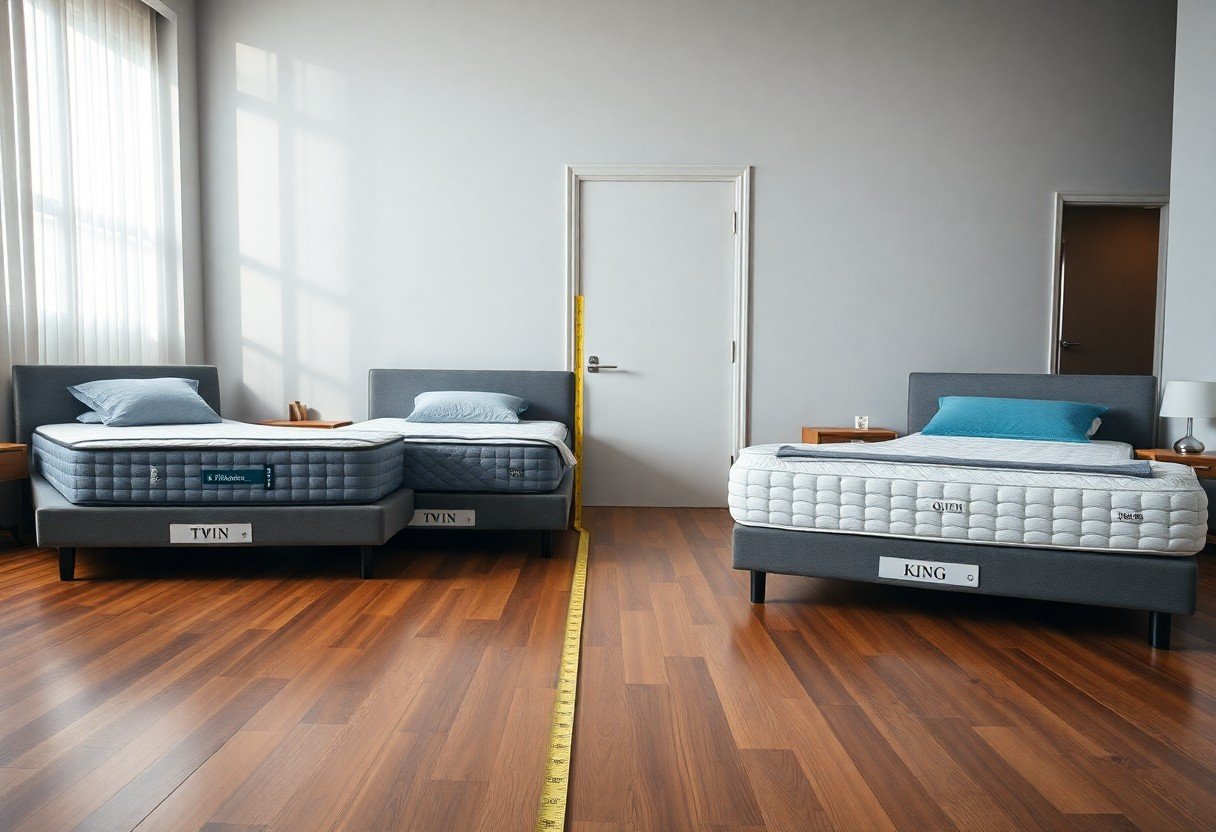
How to Choose the Right Mattress Size for Your Bedroom
Most people overlook how mattress size directly affects both sleep quality and room functionality, leading to cramped spaces or compromised comfort. You need a size that fits your bedroom dimensions, supports your sleep habits, and aligns with your lifestyle. Getting this decision right transforms your bedroom into a well-balanced, restful space.
Assessing Your Bedroom Dimensions
Measuring Total Floor Square Footage
Start by using a tape measure to record the length and width of your bedroom in feet. Multiply these two numbers to determine the total square footage, which gives you a baseline for what mattress sizes could realistically fit. A typical small bedroom measures around 10 by 10 feet, or 100 square feet, limiting options to smaller configurations like full or queen sizes without overcrowding.
Rooms ranging from 120 to 144 square feet, such as a 12-by-12 layout, open up more possibilities, including king-sized mattresses if arranged thoughtfully. Always measure twice to avoid miscalculations, especially in older homes where walls may not be perfectly square. Built-in obstructions like closets, sloped ceilings, or angled walls can reduce usable space, so account for these when calculating open floor area.
Consider how natural pathways affect usable square footage; a door that swings inward or a hallway leading to a bathroom cuts into functional space. Even with 150 square feet, poor layout choices can make a room feel cramped. Focus on the actual open rectangle where furniture will sit, not just the total room dimensions, to make a realistic assessment.
Factoring in Essential Furniture Clearance
Allow at least 24 inches of clearance around each side of the bed for comfortable access and airflow. This space ensures you can open drawers, move around easily, and maintain a sense of openness in the room. Without adequate breathing room, even a queen mattress can make a bedroom feel cluttered and restrictive.
Other furniture like nightstands, dressers, and wardrobes require their own clearance zones. A six-drawer dresser needs about 36 inches in front for full drawer extension, while closet doors may need 30 inches of swing space. Map out these zones before finalizing your mattress size to prevent a congested layout.
Doors and windows dictate fixed boundaries; a bed should never block a window’s operation or a door’s full arc. Position the bed so it doesn’t interfere with light flow or emergency exits. A well-planned clearance layout enhances both safety and daily convenience, making the room more livable long-term.
Clearance isn’t just about movement-it also affects furniture longevity. Tight spaces trap moisture and restrict ventilation, potentially leading to mold or fabric deterioration over time. Keeping space between the mattress and walls improves air circulation, especially in humid climates, helping maintain material integrity and indoor air quality.
Evaluating Personal Sleeping Factors
Sleep quality often reflects how well your mattress aligns with individual habits and physical needs. Your typical sleep posture influences the space you require each night. Side sleepers may stretch laterally, while back sleepers tend to remain centered but need adequate length. Movement during sleep cycles also plays a role, especially for those who shift frequently. A restless sleeper benefits from extra width, reducing the chance of feeling confined. Personal comfort isn’t just about softness or firmness; spatial freedom contributes significantly to uninterrupted rest. Any mismatch between body mechanics and mattress dimensions can lead to discomfort over time.
Accounting for the Number of Sleepers
Sharing a bed multiplies spatial demands, requiring careful consideration beyond individual needs. Two adults typically move independently throughout the night, increasing the likelihood of disturbance without sufficient separation. A queen mattress may suffice for a couple who sleep close, but those who prefer personal space often find it restrictive. Adding a child or pet temporarily raises the occupancy load, further compressing available area. Couples with differing sleep schedules might need even more room to avoid disruption during entry or exit. Any shared sleeping arrangement demands a balance between intimacy and independence, with mattress size serving as a key mediator.
Considering Height and Preferred Sleep Positions
Taller individuals often struggle with standard mattress lengths, especially if they exceed 6 feet in height. An individual sleeping on a full-size mattress may have their feet hang off the edge, causing discomfort and misalignment. Sleep position amplifies this issue; a person who sleeps curled on their side occupies more horizontal space than one lying flat on their back. Stomach sleepers extend fully, needing both length and width to maintain posture. Those who sprawl or stretch during deep sleep stages require additional room to move without constraint. Any restriction in movement can lead to stiffness or frequent awakenings.
Someone who consistently wakes with shoulder or hip tension may unknowingly be compensating for limited space. A 6’2″ adult sleeping diagonally across a twin mattress, for example, illustrates how mismatched dimensions disrupt rest. Adjusting for height means selecting a mattress that allows at least 4 inches of clearance beyond your total height. Sleep positions that involve bending or twisting, like the fetal position, demand width more than length. Any long-term discomfort linked to posture may stem not from support quality but from inadequate surface area.
How to Navigate Standard Mattress Sizes
Comparing Twin, Full, and Queen Dimensions
Standard mattress sizes vary significantly in width and length, directly affecting how they fit within your space and accommodate sleepers. A Twin mattress measures 38 inches wide by 75 inches long, making it ideal for children, teens, or single adults in compact rooms. The Full, also known as a Double, increases the width to 54 inches while maintaining the same 75-inch length, offering more shoulder room but still fitting in modest bedrooms. The Queen, at 60 inches wide and 80 inches long, is the most popular choice for couples or individuals who want extra space without overwhelming the room. Each size serves a distinct purpose depending on room dimensions and user needs.
Understanding these differences helps prevent overcrowding or underutilizing bedroom space. A mid-sized SaaS firm’s employee converting a home office into a guest room might find a Twin sufficient for occasional use. Someone sharing the bed regularly may quickly outgrow a Full, especially if both partners are above average height. The Queen’s added length benefits taller individuals, eliminating the need to curl at the foot. Room traffic flow, furniture placement, and door swing radius all interact with mattress footprint, so precise measurements matter.
Mattress Size Comparison
| Twin | 38″ x 75″ |
| Full (Double) | 54″ x 75″ |
| Queen | 60″ x 80″ |
Understanding King and California King Options
King and California King mattresses cater to those prioritizing maximum sleeping area and comfort. The standard King measures 76 inches wide by 80 inches long, providing each sleeper the equivalent of a Twin XL’s width. This size suits master bedrooms with ample floor space and minimal furniture congestion. The California King is slightly narrower at 72 inches wide but extends to 84 inches in length, making it a better fit for taller individuals. Its elongated shape demands careful planning, as many standard bedrooms lack the extra four inches in length clearance.
Choosing between the two often comes down to room proportions and body type. A long, narrow bedroom may accommodate a California King more easily than a square-shaped King. Some luxury bedding brands offer custom sizes or split bases for adjustable bases, adding flexibility. Delivery access, stairwell width, and elevator dimensions can also influence feasibility, especially in older buildings or upper-floor units. Measure doorways and hallways before committing to either size.
One couple in a historic brownstone opted for a King but discovered their bedroom door frame limited entry, requiring disassembly of a closet wall. This experience underscores the importance of logistics beyond floor plan dimensions. California King sets may require specialty sheets and bedding, often at a higher cost due to less mass production. Both sizes demand a minimum of 30 inches of clearance around the bed for comfortable movement, so plan accordingly.
Pro Tips for Room Layout Visualization
Sketching your bedroom’s footprint on graph paper or using a digital room planner helps clarify spatial relationships before purchasing. Include fixed elements like windows, outlets, and radiators to identify where furniture can realistically fit. A mid-sized SaaS firm’s remote team used such tools to redesign home offices, finding that visualizing layouts reduced costly return shipments by aligning expectations early. Assume that
- you’ll need at least 24 inches of clearance for side access,
- nightstands typically require 18-24 inches beside the bed,
- dressers and seating need 30 inches of forward clearance for use.
Using Physical Markers to Test Proportions
Masking tape on the floor outlining the mattress perimeter gives a real-world sense of scale. This method reveals how the bed dominates the room, especially in spaces under 12 feet by 12 feet. Position the tape near door swings and closet openings to check for interference during daily use. A queen-sized outline in a 10×10 room leaves minimal walking space, making the room feel confined. Test different orientations-centered, angled, or pushed to one wall-to assess visual balance. Assume that
Ensuring Unobstructed Access to Closets and Doors
Swinging closet doors must clear the bed’s edge by at least 2 inches when fully open. Slide closet doors require unimpeded track space, which a protruding mattress corner can block. Position the bed so that opening mechanisms operate without requiring you to step around or over bedding. In a studio apartment layout, placing a full-sized bed too close to the entrance made nighttime entry awkward, forcing repositioning after two weeks. Assume that
bed placement affects more than comfort-it influences daily movement patterns and room usability over time.
How to Choose Based on Room Functionality
Room purpose directly influences the ideal mattress size, shaping both comfort and usability. A spare room used occasionally for visitors benefits more from strategic space planning than maximum sleeping area. Choosing a size that aligns with how often the room is used ensures it remains functional without sacrificing guest comfort when needed. A twin or full mattress often suffices, leaving room for storage or a small workspace.
Primary bedrooms serve as personal retreats where rest and relaxation take priority. Sleep quality improves when movement isn’t restricted, especially for couples or those who prefer extra space. Larger formats like queen or king accommodate shifting during sleep and provide room for reading, lounging, or using devices. The long-term benefit of undisturbed rest often outweighs the appeal of fitting additional furniture.
Multi-use rooms, such as home offices that double as guest areas, require adaptable solutions. A sofa bed or Murphy bed with a full-size mattress offers flexibility without permanent space loss. These setups maintain daily functionality while ensuring overnight guests aren’t compromised. The right balance emerges when the room supports both routines seamlessly.
Maximizing Utility in Guest Bedrooms
Guest rooms must balance readiness with everyday efficiency. A full-size mattress provides adequate comfort for most visitors while preserving floor space for storage or seating. Most overnight guests stay one to two nights, making expansive sleeping areas less necessary than ease of access and a clean, inviting setup.
Storage becomes a priority when the room also houses luggage, seasonal items, or linens. Built-in drawers under a low-profile bed frame or an armoire near the foot of a twin bed can maintain order. A mid-sized SaaS firm’s remote employee might use such a room weekly for work calls, requiring a tidy, multipurpose layout.
Opting for a sleeper sofa instead of a traditional bed increases daytime usability. When not in use, it functions as seating for reading or video meetings. The mattress remains hidden, reducing dust accumulation and simplifying cleaning between visits. This setup works especially well in urban apartments where square footage is limited.
Prioritizing Comfort in Primary Suites
Primary bedrooms are sanctuaries where sleep quality directly affects daily performance. A queen mattress fits most master rooms while offering enough space for two sleepers to move independently. Couples who share the bed benefit from reduced motion transfer and personal zones, especially when using memory foam or hybrid constructions.
King-size mattresses suit larger rooms where space allows for nightstands, seating, and walking room on both sides. The extra width helps when one partner reads or uses a tablet while the other sleeps. Some users report fewer disturbances during the night simply due to increased separation across the surface.
Room dimensions shouldn’t be the only deciding factor-lifestyle habits matter just as much. If you frequently wake with stiffness or feel cramped by morning, upgrading size may resolve the issue without changing firmness. A restful night often begins with enough room to sleep in your natural position.
Long-term comfort in a primary suite hinges on consistent, uninterrupted rest, which a properly sized mattress supports. Those who enjoy morning stretches or late-night reading find a larger surface improves their routine. Even in moderately sized rooms, choosing a size that allows for both sleep and personal habits enhances daily well-being. A couple using a split king with adjustable bases can customize firmness and elevation, addressing differing preferences without compromise.
Critical Factors Influencing Long-Term Satisfaction
Long-term satisfaction with your mattress size hinges on more than initial comfort. Your daily routines, sleep habits, and how you use your bedroom space all contribute to whether your choice remains suitable over time. A couple sharing a bed may find a queen sufficient now, but frequent disturbances could signal a need for more personal space. Room proportions also play a role-placing a king-sized mattress in a small room can make movement difficult, even if it feels luxurious at first. Compatibility with existing furniture and door clearance affects long-term usability just as much as comfort.
- Ensure at least 24 inches of clearance around the bed for easy movement
- Consider how pets or children might share the sleeping space
- Account for nightstand and dresser placement relative to bed size
- Think about long-term durability of the mattress frame and foundation
- Factor in ease of cleaning and under-bed storage access
The bedroom’s primary function-rest, work, or multi-use-shapes how well a mattress size performs over years of use.
Balancing Mattress Size with Budget Constraints
Cost increases significantly with mattress size, and larger models often require new frames, sheets, and foundations. A mid-sized SaaS firm relocating its office might downsize furniture to save on space, much like homeowners adjusting for financial efficiency. You may desire a California king, but the added expense of specialty bedding and potential room modifications can strain a fixed budget. Smaller rooms also limit return on investment if oversized furniture crowds the space. Prioritizing long-term value means aligning size with both financial limits and spatial reality.
Larger mattresses typically cost 20-40% more than their smaller counterparts, not including ancillary expenses. Custom-sized bedding, heavier foundations, and reinforced bed frames add hidden costs that accumulate. You might save upfront with a full-size mattress, but future lifestyle changes could make that choice feel restrictive. Assessing total cost of ownership-beyond the initial purchase-helps avoid costly replacements down the line. Value emerges not from size alone, but from proportion, durability, and fit within your financial plan.
The long-term affordability of your mattress choice depends on how well it balances immediate comfort with sustained practicality.
Planning for Future Lifestyle Transitions
Life changes such as marriage, remote work, or aging in place can redefine your bedroom’s role. A guest who frequently stays over may justify a larger bed or a convertible setup. You might start solo in a queen, but plans for cohabitation warrant considering a king before committing. Remote work setups sometimes encroach on bedroom space, making oversized mattresses impractical. Anticipating these shifts helps avoid premature replacements or uncomfortable compromises.
Empty nesters downsizing to a smaller home often discover their king bed no longer fits. Conversely, young families may transition from a full to a queen as children grow and share the room temporarily. Mobility issues in later years might require easier access, favoring lower profiles or narrower widths. Even climate can influence decisions-larger mattresses retain more heat, affecting comfort in warmer regions. Designing for adaptability ensures your choice remains functional across life stages.
The mattress you choose today should accommodate not just current needs, but foreseeable changes in household composition and room use.
For instance, someone planning to work remotely long-term might benefit from a split-king adjustable base, allowing independent positioning while preserving space for a small office nook. These configurations support evolving routines without requiring a full bedroom redesign. The flexibility to adjust firmness, angle, or even bed height can extend the useful life of your mattress far beyond its initial setup. Future-proofing isn’t about predicting every change, but building in room for adaptation as needs shift over time.
Summing up
Selecting the right mattress size involves balancing available space, your sleep habits, and how you use the bedroom. A king-size mattress might appeal if you value room to stretch or share the bed with pets or children, but it could overwhelm a 10×10 foot room, leaving little clearance for furniture or movement. You need at least 30 inches of space between the bed and walls or other furniture for comfortable access and airflow.
Your lifestyle plays a decisive role. If you work from bed occasionally or use it for lounging, a larger size offers functional benefits. For studio apartments or guest rooms, a full or queen with storage underneath maximizes utility without crowding the floor plan. A mid-sized SaaS firm employee living in a city loft might prefer a queen with a platform base to maintain an open feel while ensuring rest quality.
Always measure twice and consider doorways and stairwells before committing. An ideal fit today supports comfort, ease of movement, and room aesthetics for years. A well-chosen mattress size contributes directly to daily rest and long-term bedroom satisfaction.