How Circadian Rhythm Controls Your Sleep Cycle
There’s a biological timer embedded deep within your brain that dictates when you feel alert, when you grow drowsy, and how deeply you sleep. This internal system, known as your circadian rhythm, responds to environmental cues like light and darkness, aligning your sleep cycle with the 24-hour day. You experience its influence daily, whether you realize it or not.
The Internal Chronometer
Your brain houses a precise biological clock that operates on a near-24-hour schedule, regulating when you feel alert or drowsy. This internal chronometer does not rely on external cues alone but maintains its rhythm even in complete darkness, as demonstrated in isolation studies where participants continue to follow a consistent sleep-wake pattern. The consistency of this cycle suggests a deeply embedded mechanism, one that evolved to align with Earth’s rotation. You experience its influence daily, whether you realize it or not, through subtle shifts in body temperature, hormone levels, and cognitive sharpness.
Light remains the most powerful influencer of this internal timing system, capable of resetting the clock each day. When photons enter your eyes, they trigger signals that travel along specific neural pathways, directly informing your brain about the time of day. These signals do not depend on vision in the traditional sense; even individuals with certain forms of blindness can detect light for circadian purposes through specialized retinal cells. The information gathered shapes the timing of melatonin release, ensuring it rises in the evening and drops in the morning, aligning your physiology with the solar cycle.
At the core of this system lies the suprachiasmatic nucleus, a tiny region in the hypothalamus containing about 20,000 neurons. This cluster acts as the master oscillator, synchronizing peripheral clocks in organs like the liver, heart, and kidneys. Each of these clocks responds to signals from the brain but also maintains local timekeeping relevant to its tissue’s function. The master oscillator ensures coherence across the body, preventing misalignment that could disrupt metabolism, immune response, or sleep quality. Its precision is such that it can detect minute changes in light duration, adjusting your internal state before dawn even breaks.
Neural Pathways of Light
Specialized ganglion cells in your retina contain melanopsin, a photopigment sensitive to blue-wavelength light. These cells are not involved in image formation but instead relay ambient light levels directly to the suprachiasmatic nucleus via the retinohypothalamic tract. This pathway functions independently of the visual cortex, allowing your brain to track daylight even if you are not consciously observing it. The signal strength varies with light intensity and duration, enabling fine-tuned adjustments to your internal clock.
Exposure to morning light strengthens the synchronization of your circadian rhythm, advancing your sleep phase slightly each day. Evening light, particularly from screens or artificial sources, has the opposite effect, delaying melatonin onset and pushing your bedtime later. The timing of light exposure matters more than total duration, with brief, well-placed bursts having a disproportionate impact. A mid-sized SaaS firm implemented morning light therapy for night-shift developers and observed improved alertness and fewer sleep complaints.
Your nervous system integrates these light signals with other environmental inputs, such as meal timing and physical activity, to refine circadian alignment. The integration occurs within minutes, with neural firing patterns in the suprachiasmatic nucleus shifting in response to new data. This adaptability allows you to adjust to time zone changes, though the process remains imperfect and often lags behind rapid travel. Jet lag exemplifies the temporary desynchronization between your internal clock and local time.
The Master Oscillator
The suprachiasmatic nucleus maintains its rhythmicity through a molecular feedback loop involving clock genes such as *Per*, *Cry*, and *Bmal1*. These genes produce proteins that accumulate in the cell during the day and degrade at night, creating a self-sustaining oscillation. The cycle repeats approximately every 24 hours, even in isolated tissue cultures, demonstrating its intrinsic stability. This genetic machinery operates in nearly every cell, but the suprachiasmatic nucleus coordinates the timing across the entire organism.
Signals from the master oscillator propagate through neural, hormonal, and behavioral outputs, influencing cortisol release, core body temperature, and sleep propensity. It communicates with the pineal gland to regulate melatonin, ensuring it is secreted only in darkness. The timing of this release is so reliable that it is used in clinical settings to assess circadian phase. Misalignment, as seen in shift workers, correlates with disrupted glucose metabolism and increased cardiovascular risk.
Genetic variations in clock genes can alter your natural sleep preference, making some people inherently early risers or night owls. These differences are not mere habits but rooted in the biochemical properties of your circadian proteins. A mutation in the *Per2* gene, for example, has been linked to familial advanced sleep phase syndrome, where individuals fall asleep and wake up several hours earlier than average. Such cases highlight the genetic precision underlying your internal timing system.
Your exposure to artificial light at night can weaken the amplitude of the suprachiasmatic nucleus’s rhythm, reducing the contrast between day and night signals

Chemical Rhythms of the Night
Melatonin Synthesis
Your body begins producing melatonin in the pineal gland as daylight diminishes, signaling the onset of biological night. This synthesis relies on input from the suprachiasmatic nucleus, which processes light information gathered through the retina. In a typical cycle, melatonin levels rise steadily after dusk, often reaching peak concentration between 2 a.m. and 4 a.m. in individuals following a natural light-dark schedule. Exposure to artificial light, especially in the blue spectrum, can delay or suppress this release, disrupting the timing of sleep onset. A mid-sized SaaS firm that implemented amber lighting in its evening work shifts reported improved employee sleep quality within three weeks. The enzyme arylalkylamine N-acetyltransferase plays a pivotal role in converting serotonin into melatonin, making it a key molecular switch in this nightly transition.
Production slows in the early morning hours as light exposure increases, even through closed eyelids. The duration and amplitude of melatonin secretion vary with age, with children exhibiting earlier and higher peaks than older adults. Some individuals with delayed sleep phase disorder show a marked offset in melatonin onset, sometimes by several hours. This shift can make conventional sleep schedules difficult without intervention. Clinicians often use saliva or blood tests to measure melatonin levels when diagnosing circadian rhythm disorders. Consistent nightly routines that include dim lighting and screen reduction support the natural timing of this biochemical cascade.
Supplemental melatonin is commonly used to shift sleep timing, particularly in jet lag or shift work scenarios. The exogenous hormone can advance or delay circadian phase depending on the time of administration. Doses as low as 0.3 mg have been shown to influence circadian timing without causing significant next-day drowsiness. Timing is more critical than dosage when using melatonin to reset the internal clock. Taking it too early or too late can result in phase delays or advances that worsen misalignment. Your response to supplementation may vary based on genetics, baseline rhythm, and light exposure patterns.
The Absence of Glare
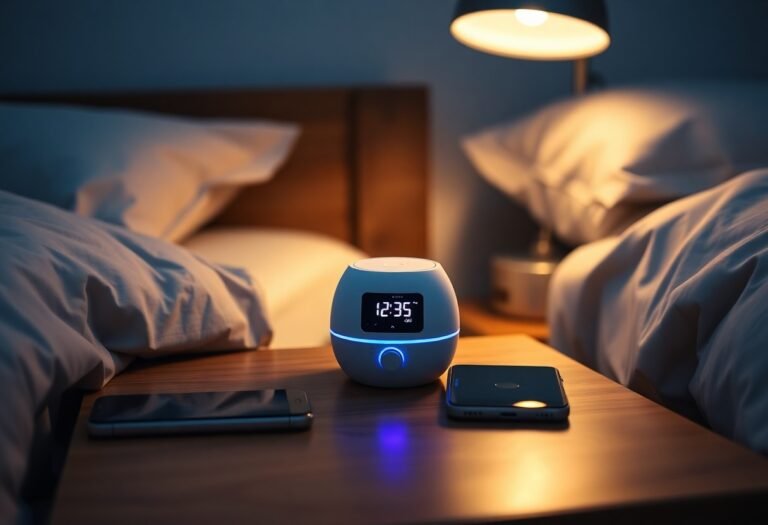
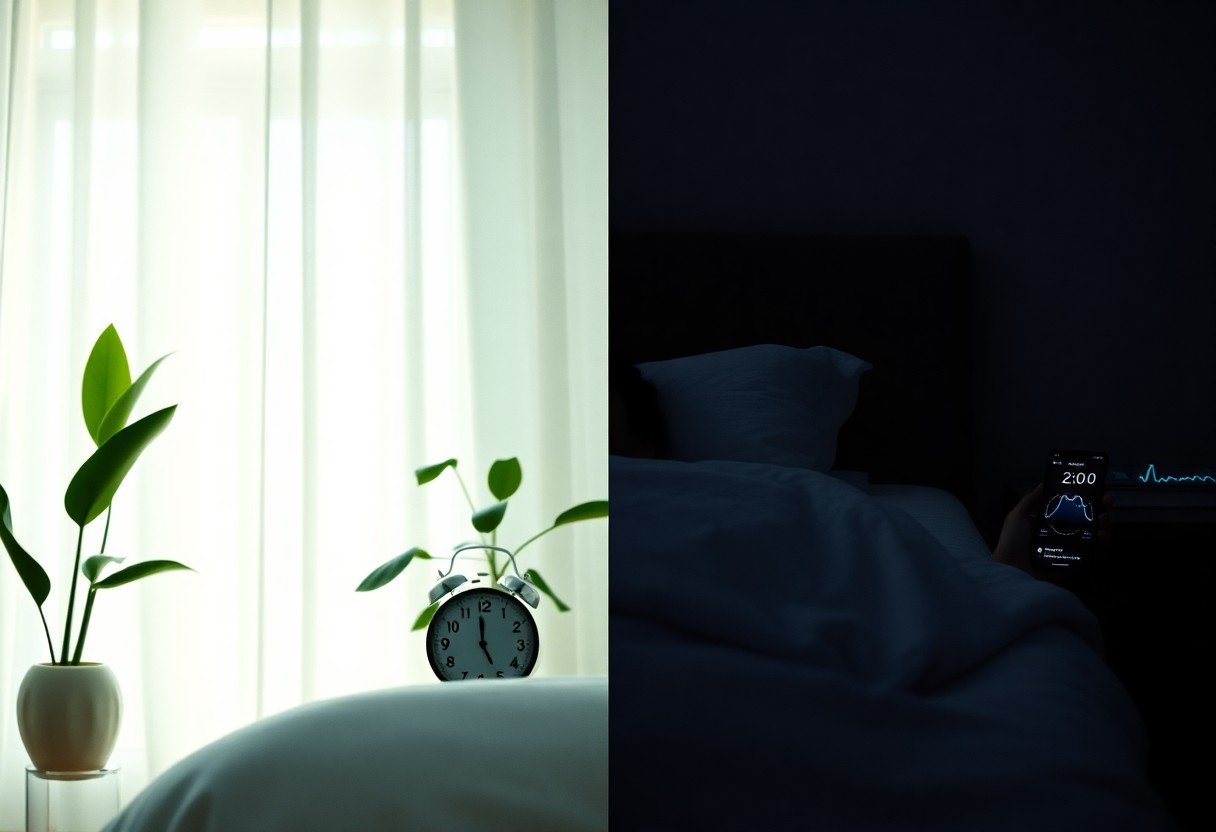
Darkness without glare supports the integrity of melatonin synthesis and sleep architecture. Even low levels of ambient light, such as from a digital clock or streetlamp, can interfere with deep sleep stages. Your eyes contain intrinsically photosensitive retinal ganglion cells that detect light intensity and relay it directly to the brain’s clock, independent of visual perception. These cells are especially sensitive to short-wavelength blue light, which is abundant in LED screens and overhead fixtures. A study of urban apartment dwellers found that those using blackout curtains experienced faster sleep onset and fewer nighttime awakenings. Eliminating glare doesn’t require complete darkness but rather the removal of direct or reflected light sources in the sleeping environment.
Indirect lighting, such as floor lamps with warm bulbs, can provide safe illumination for nighttime movement without triggering circadian disruption. The positioning of light sources matters as much as their intensity; overhead lighting is more likely to activate the suprachiasmatic nucleus than a shaded lamp near the floor. Some sleep clinics recommend red or amber nightlights for individuals who need visibility during the night. These wavelengths are less likely to suppress melatonin compared to white or blue-enriched light. Your body interprets glare as a signal of dawn, potentially fragmenting sleep or reducing REM duration over time.
Architectural design increasingly incorporates circadian lighting principles, especially in healthcare and residential settings. Hospitals using dim, glare-free nighttime lighting report improved patient sleep and faster recovery times. The absence of glare extends beyond the bedroom-hallways, bathrooms, and even electronic devices contribute to light pollution in the sleep environment. Smart lighting systems now allow for gradual dimming and color temperature shifts in the evening. These features mimic natural twilight and support the body’s transition into rest. Your nervous system responds more favorably to diffuse, warm illumination than to sudden or harsh light exposure after sunset.
Glare reduction also benefits individuals with heightened light sensitivity, such as those with migraines or certain neurological conditions. Using matte finishes on walls and furnishings can minimize light reflection, enhancing the effectiveness of low-light strategies. Even small changes, like covering LED indicators on electronics or using fabric lampshades, contribute to a truly rest-conducive space. Your circadian system evolved in environments without artificial glare, making modern lighting one of the most pervasive disruptors of natural sleep patterns.
Physical Ebbs and Flows
Your body operates on a rhythmic schedule that extends far beyond sleep and wakefulness, shaping physical performance, alertness, and recovery throughout the day. Core body temperature peaks in the late afternoon, often around 5 or 6 p.m., aligning with improved muscle function and reaction time. Athletes may notice stronger performance during this window, as physiological conditions support endurance and coordination. Circadian influence also governs heart rate and blood pressure, which typically dip during the night and rise steadily toward morning. This natural surge helps prepare the body for waking activity, even before you open your eyes. Hormonal fluctuations, including cortisol, contribute to this morning awakening response, priming the cardiovascular system for movement and mental engagement.
Strength and flexibility follow a similar daily arc, with joint mobility and muscle elasticity increasing as the day progresses. A mid-sized SaaS firm conducting ergonomic assessments found employees reported fewer physical discomforts during afternoon tasks compared to early morning meetings. Coordination and balance, regulated in part by the suprachiasmatic nucleus, also show measurable variation across the 24-hour cycle. Reaction times are generally slowest in the early hours, improving through midday and peaking in the late afternoon. These shifts are not merely behavioral but rooted in neural timing, with motor cortex activity syncing to circadian cues. Physical resilience, including pain tolerance and injury recovery, appears optimized when aligned with these internal rhythms.
Even recovery processes like tissue repair and inflammation control are timed by circadian signals. Cellular regeneration accelerates during sleep, particularly in the first half of the night when slow-wave sleep dominates. Lymphatic clearance in the brain increases during rest, removing metabolic waste accumulated during waking hours. Disruption of this cycle, such as through night shift work, can delay healing and increase susceptibility to chronic inflammation. The body’s ability to respond to physical stress depends not only on effort but on timing, with restorative functions most active when aligned with natural darkness. Misalignment weakens the body’s capacity to maintain equilibrium over time.
Thermal Regulation
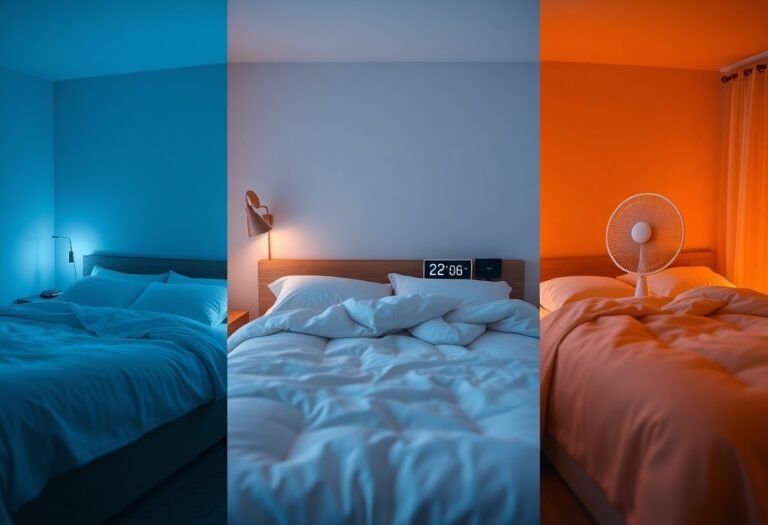
Body temperature fluctuates in a precise circadian pattern, typically ranging between 0.5 and 1 degree Celsius over 24 hours. The decline begins in the evening, initiated by the pineal gland’s release of melatonin, which signals the body to prepare for sleep. This cooling process supports the transition into rest by reducing metabolic activity and promoting drowsiness. The lowest point usually occurs around 4 a.m., coinciding with the deepest stages of non-REM sleep. Environmental factors like room temperature can amplify or interfere with this natural drop, making cooler sleeping environments more conducive to sustained rest. Warm baths before bed can paradoxically aid cooling by triggering vasodilation, allowing heat to dissipate from the skin after exiting the water. Thermal comfort is not just a preference but a physiological cue that reinforces sleep onset.
During the waking phase, core temperature steadily climbs, driven by metabolic activity and hormonal shifts. The morning rise in cortisol helps mobilize energy and increases internal heat production. This warming supports alertness, cognitive function, and physical readiness, peaking in the late afternoon. People often feel most energetic during this period, partly due to optimal neural conductivity and muscle efficiency at higher temperatures. The body’s ability to regulate heat also affects endurance, with performance in endurance sports often correlating with thermal timing rather than training alone. Exercising in extreme heat or cold can disrupt this rhythm, especially if it occurs during atypical circadian phases.
Night shift workers frequently experience thermal misalignment, as their bodies attempt to cool during daytime sleep despite environmental and behavioral cues promoting wakefulness. This mismatch contributes to fragmented sleep and reduced sleep quality. The brain struggles to initiate cooling when exposed to daylight and activity, delaying the onset of restorative stages. Even minor disruptions, such as using electronic devices before bed, can interfere with thermal regulation by suppressing melatonin and maintaining higher core temperatures. Maintaining a consistent sleep schedule helps stabilize this cycle, allowing the body to anticipate and execute temperature shifts efficiently. A stable thermal rhythm supports deeper, more restful sleep over time.
Metabolic Shifts
Metabolism follows a circadian blueprint, with insulin sensitivity, glucose processing, and lipid breakdown all varying predictably across the day. Insulin response is strongest in the morning, making it the optimal time for carbohydrate intake. Eating a large meal late at night, when insulin sensitivity declines, can lead to elevated blood glucose and increased fat storage. The liver adjusts its activity based on circadian signals, ramping up glycogen breakdown in the early morning to fuel waking functions. Enzymes involved in digestion and nutrient absorption are also expressed in rhythmic patterns, aligning peak activity with typical meal times. Disrupting these rhythms, such as through irregular eating schedules, can impair metabolic efficiency and contribute to weight gain.
Fractures in the CycleModern environments frequently disrupt the precise timing of your circadian rhythm, introducing inconsistencies that degrade sleep quality over time. Artificial lighting, especially from screens emitting blue wavelengths, delays melatonin onset and shifts your internal clock later into the night. A software developer working late under LED desk lamps may find themselves unable to fall asleep before 2 a.m., even when fatigued earlier. These repeated delays train your body to expect wakefulness during biological night, weakening the natural sleep signal. Chronic exposure to such conditions fragments your rest and reduces slow-wave and REM sleep duration.
Synthetic Luminance
Even dim household lighting can suppress melatonin by up to 50% in some individuals, altering your hormonal nightfall cues. Smartphones, tablets, and overhead LEDs emit luminance that mimics daylight, tricking your suprachiasmatic nucleus into perceiving extended daytime. You might scroll through a news feed in bed, unaware that the 300 lux from your tablet rivals ambient office lighting. This exposure delays core body temperature drop, a key physiological step in sleep readiness. Shift workers exposed to bright light at night show disrupted cortisol rhythms, with elevated levels during intended rest periods. The brain’s interpretation of light intensity, not just duration, determines the degree of circadian interference.
Circadian Misalignment
When your sleep schedule drifts significantly from your biological timing, you experience circadian misalignment, a state linked to metabolic and cognitive impairments. Social jet lag, the mismatch between biological and social time, affects millions who sleep later on weekends than weekdays. A university student staying up until 3 a.m. Friday and Saturday, then waking at 7 a.m. Sunday for obligations, accumulates a sleep debt equivalent to crossing multiple time zones. This misalignment desynchronizes peripheral clocks in organs like the liver and pancreas, impairing glucose regulation. Long-term, such patterns correlate with increased risk of mood disorders and cardiovascular strain.
Repeated circadian misalignment can alter gene expression in the SCN, reducing its responsiveness to natural light cues over time. You may notice growing difficulty waking without an alarm, even after eight hours in bed, because your internal clock no longer aligns with your schedule. Research on flight attendants with chronic jet lag shows persistent deficits in memory consolidation and executive function, suggesting neural adaptation to instability. Your body adapts poorly to erratic timing, favoring consistency above all for optimal function.
Reclaiming the Natural Pulse
Morning Solar Exposure
Light from the morning sun directly influences the timing of your suprachiasmatic nucleus, the brain’s central clock. Exposure within thirty minutes of waking sends a strong signal to suppress melatonin and initiate cortisol release, aligning your internal rhythm with the solar day. A walk outside, even on an overcast morning, provides sufficient intensity to reset your cycle, especially if artificial lighting dominated your evening. Unlike indoor lighting, natural sunlight contains a broad spectrum that stimulates retinal cells linked to circadian regulation. Consistent timing strengthens the precision of your rhythm, reducing daytime fatigue and improving nighttime sleep onset. One mid-sized SaaS firm reported fewer afternoon productivity dips after introducing morning light breaks for remote teams.
Your eyes detect blue-wavelength light most effectively in the early hours, triggering neural signals that promote alertness. Sitting near a window while having coffee can be enough if outdoor access is limited. The key is unfiltered exposure-wearing sunglasses or staying behind glass reduces the effect. Over several days, this practice stabilizes the timing of sleep and wakefulness, making it easier to fall asleep at night without reliance on sleep aids. People who commute by foot or bike during sunrise hours often report sharper focus in the morning hours. This response is not psychological-it is a hardwired physiological reaction shaped by evolutionary necessity.
Even brief exposure can shift your circadian phase forward, particularly helpful if you tend to stay up late. The effect is strongest when light occurs at the same time each day, reinforcing predictability. Those working night shifts may use timed light boxes to simulate dawn, though natural sunlight remains superior. Children in classrooms with high morning light exposure show improved attention spans compared to those in dimly lit rooms. Your body treats early light as a daily cue that the active phase has begun, setting the tempo for hormone release, metabolism, and cognitive performance throughout the day.
Evening Rituals
Dimming lights two hours before bed signals your brain to begin melatonin synthesis, preparing your body for sleep. Replacing overhead lighting with warm-toned lamps reduces blue spectrum exposure that delays drowsiness. Reading a physical book or practicing gentle stretching in low light supports the transition from alertness to rest. Some households adopt a “no screens” rule after 8 p.m., noticing faster sleep onset within a week. A designer in Portland reported cutting her sleep latency in half after switching to candlelight in the evenings. These behaviors mimic ancestral conditions when firelight, not fluorescents, marked the end of the day.
Lowering ambient temperature in your home aligns with your body’s natural drop in core temperature at night. Setting the thermostat to 68°F (20°C) or cooler encourages deeper sleep onset. Taking a warm bath ninety minutes before bed can accelerate this process, as the post-bath cooldown mimics the body’s internal temperature curve. Herbal teas like chamomile or passionflower may support relaxation, though effects vary by individual. Consistency matters more than any single action-repeating the same sequence nightly trains your nervous system to expect sleep. One software developer began journaling each evening and found his nighttime awakenings decreased significantly.
Electronic devices emit light that suppresses melatonin, even at low brightness. Using blue light filters helps, but does not eliminate the disruption caused by cognitive stimulation from messages or content. Switching to audio-based activities-listening to podcasts or ambient soundscapes-can maintain engagement without visual interference. Families who institute shared wind-down routines often report improved sleep quality across all members. The ritual itself becomes a cue, independent of light or temperature, reinforcing the boundary between day and night. Over time, your body begins to anticipate these signals, making sleep feel less like an effort and more like a natural descent.
Evening rituals work best when they are predictable and free of stress triggers. Avoiding work-related conversations, intense exercise, or emotionally charged media in the last two hours prevents activation of the sympathetic nervous system. Instead, activities that engage the parasympathetic system-such as deep breathing, light massage, or listening to slow-tempo music-prepare the body for rest. A study involving office workers found that those who followed a structured evening routine fell asleep faster and reported feeling more refreshed in the morning. The cumulative effect of small, consistent choices shapes long-term sleep quality more than any single intervention.
Conclusion
Your circadian rhythm operates as an internal conductor, orchestrating the precise timing of physiological processes that govern your sleep and wakefulness. Light exposure, particularly in the morning, resets your suprachiasmatic nucleus daily, aligning your internal clock with the 24-hour day. This synchronization influences when melatonin rises in the evening, preparing your body for rest, and when cortisol peaks in the morning, promoting alertness.
Disruptions such as irregular sleep schedules, nighttime screen use, or shift work interfere with this finely tuned system, leading to difficulty falling asleep, reduced sleep quality, or daytime fatigue. A software developer working late under bright lights may find their melatonin release delayed by over an hour, shifting their natural sleep window. Consistent routines and controlled light exposure help restore alignment, reinforcing the body’s innate timing.
Over time, honoring your circadian biology supports not just better sleep but improved metabolic function, mood regulation, and cognitive performance. You function best when your daily habits reflect your body’s internal expectations, shaped by millions of years of evolution. Aligning with natural light cycles remains one of the most effective strategies for sustaining long-term well-being.