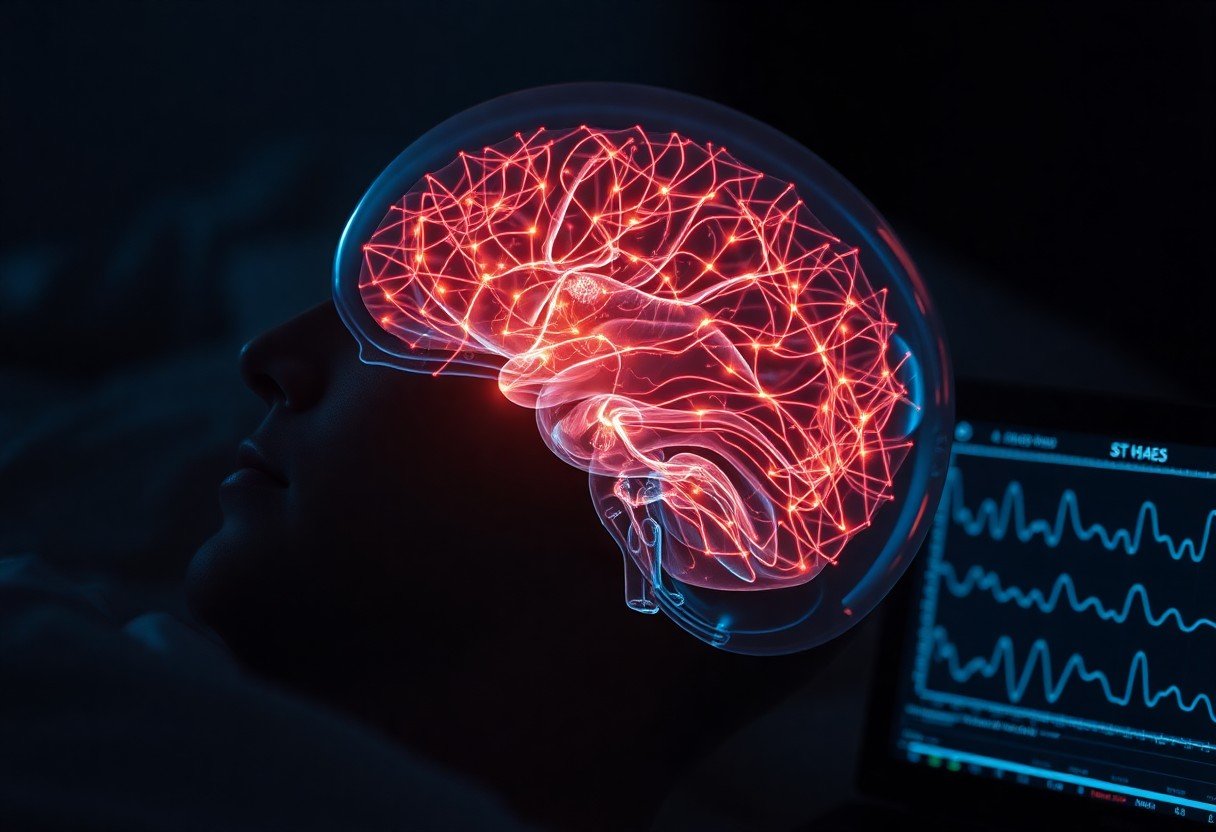
What Happens Inside Your Brain While You Sleep?
Just as the world quiets at night, your brain shifts into a highly active, orchestrated state far from rest. While your body lies still, your neurons fire in precise patterns, managing memory consolidation, clearing metabolic waste, and regulating emotional balance. You’re not merely unconscious-you’re undergoing a nightly transformation necessary to cognition, mood, and long-term brain health.
The Nocturnal Symphony
The Descent into NREM
As darkness settles and your eyelids grow heavy, your brain begins a quiet retreat from wakefulness, slipping into the first stages of non-rapid eye movement (NREM) sleep. Neurons in the cerebral cortex slow their firing, transitioning from the erratic rhythms of alertness to synchronized, rolling waves detectable on an EEG. This initial phase, lasting minutes, marks the threshold where conscious thought blurs and environmental awareness fades.
Deeper within NREM, your brain enters stage three, often called slow-wave sleep. Here, delta waves dominate, signaling a profound reduction in metabolic activity. Blood flow shifts away from the brain’s surface, and body temperature drops slightly, conserving energy. A mid-sized SaaS firm might schedule server maintenance overnight, but your brain is already running its own crucial updates, preparing for memory consolidation.
During these slow-wave cycles, the thalamus acts as a gatekeeper, blocking external sensory input to prevent disruptions. This isolation allows the hippocampus to replay the day’s experiences, transferring fragments of memory to the neocortex for long-term storage. Each wave reinforces neural pathways, strengthening recall without conscious effort, like a librarian reshelving books in the quiet of night.
The Paradox of REM
After about 90 minutes, your brain abruptly shifts into rapid eye movement (REM) sleep, a state where neural activity surges to near-waking levels. Despite this electrical storm, your voluntary muscles remain paralyzed, a safeguard preventing you from acting out vivid dreams. This contradiction-high brain activity paired with physical stillness-defines the paradox of REM.
Your brainstem releases acetylcholine in abundance, activating visual and emotional centers while suppressing serotonin and norepinephrine. The amygdala becomes highly active, which may explain the intense emotions in dreams, from euphoria to terror. At the same time, the prefrontal cortex, responsible for logic and self-awareness, remains dampened, allowing bizarre dream narratives to unfold unchecked.
Dreams during REM often incorporate fragments of recent experiences, reshuffled into surreal sequences. A conversation from yesterday might merge with a childhood memory in a dream set on a floating train. This recombination may support emotional processing, helping you contextualize stress or unresolved feelings through symbolic narratives.
REM periods lengthen across the night, with the final one lasting up to an hour. During this time, the brain integrates emotional memories, possibly reducing their psychological charge. A person recovering from a stressful event may find clarity after several nights of REM-rich sleep, as the brain distills meaning from emotional residue.
The Cellular Housekeeping
Glymphatic Fluid Tides
While you rest, cerebrospinal fluid surges through your brain in rhythmic pulses, driven by the quiet rhythm of slow-wave sleep. This fluid moves along perivascular channels, guided by astrocytic endfeet that act like gates, opening pathways only during deep sleep. Unlike waking hours, when neural activity limits fluid flow, your sleeping brain creates space between cells, allowing this tide to sweep through with greater reach and efficiency. Researchers observed this phenomenon in mouse models, where fluorescent tracers revealed a fourfold increase in interstitial space during sleep. The brain necessaryly transforms into a more permeable environment, optimized for clearance rather than computation. These nightly tides are not random but synchronized with neural oscillations, particularly delta waves, which appear to coordinate the timing and volume of fluid movement.
Your neurons, though quiet, are not idle during these fluid cycles. They slightly shrink in volume, creating the physical gaps needed for cerebrospinal fluid to infiltrate and mix with interstitial waste. This process depends heavily on glial cells, especially astrocytes, which regulate both ion balance and fluid dynamics. When you experience fragmented or insufficient sleep, these tides weaken, reducing the brain’s ability to flush out toxins. Studies using functional imaging show that even one night of poor sleep disrupts glymphatic flow, with measurable consequences the following day. The system functions best when your body temperature drops and your breathing slows, conditions naturally met during uninterrupted sleep. This nightly rhythm mirrors a biological tide, ebbing and flowing with your sleep stages.
Disruptions to this fluid system have been linked to long-term cognitive decline. In individuals with chronic sleep disorders, glymphatic efficiency diminishes, allowing harmful proteins to linger. The brain’s ability to clear amyloid-beta, a protein associated with Alzheimer’s disease, is markedly reduced without sufficient deep sleep. Animal studies demonstrate that sleep-deprived subjects accumulate amyloid plaques faster than their well-rested counterparts. Your nightly rest, therefore, acts as a preventive maintenance cycle, not just for memory but for cellular integrity. The glymphatic system operates like a silent janitor, working only when the mind is offline. Without these tides, the brain risks becoming a reservoir for toxic byproducts.
Metabolic Waste Removal
Metabolic activity in your brain produces waste compounds with every thought, movement, and sensation. These include oxidized proteins, misfolded peptides, and metabolic byproducts like lactate, which accumulate during waking hours. During sleep, the glymphatic system flushes these substances into the lymphatic network, where they are processed and eliminated. Amyloid-beta and tau proteins, both implicated in neurodegenerative diseases, are cleared at significantly higher rates during sleep than during wakefulness. This clearance is not passive but actively enhanced by the brain’s shift into slow-wave states. The process relies on precise coordination between neural activity, vascular pulsations, and glial regulation. Without sufficient time in deep sleep, this removal slows, increasing the concentration of harmful proteins in the interstitial space.
Your brain consumes a disproportionate amount of energy relative to its size, making waste management necessary for long-term function. A mid-sized SaaS firm might generate terabytes of digital logs daily, but your brain produces an even more complex biochemical record, requiring constant cleanup. Enzymes in the interstitial fluid break down soluble waste, while larger aggregates are transported to cervical lymph nodes. This system operates most efficiently when your body remains still and your metabolism slows. Sleep disorders such as sleep apnea interrupt this process by fragmenting deep sleep stages, leading to measurable increases in neurotoxic proteins. The brain does not store waste indefinitely; it must export it nightly or face functional degradation over time.
Chronic sleep restriction leads to a backlog of metabolic debris, impairing synaptic plasticity and neuronal communication. In longitudinal studies, individuals who consistently sleep less than six hours per night show higher amyloid deposition on PET scans later in life. The brain’s waste removal is not a luxury but a biological necessity, as necessary as kidney filtration or liver detoxification. Unlike other organs, the brain lacks a conventional lymphatic system, relying instead on the glymphatic network’s unique architecture. This makes sleep the only period when comprehensive neural detoxification can occur. Missing even a few hours over multiple nights compromises this system, allowing toxins to interfere with normal signaling. The consequences are not immediate but accumulate silently, like sediment in a clogged pipe.
Sleep-dependent waste clearance is most effective during the first half of the night, when slow-wave sleep dominates. This phase provides the prolonged periods of neural silence and vascular coordination required for efficient glymphatic flow. As you age, both the volume of deep sleep and the efficiency of this system decline, contributing to increased vulnerability to neurodegeneration. Some researchers hypothesize
The Archive of Experience
Synaptic Reinforcement
During deep sleep, your brain strengthens connections between neurons that were active during waking hours. These reinforced pathways correspond to skills you practiced, information you learned, or experiences that captured your attention. A pianist who spent the afternoon mastering a new sonata will see greater synaptic consolidation in motor and auditory regions. The brain prioritizes these meaningful patterns, making them more resistant to interference. Repeated firing during slow-wave sleep increases the physical size and efficiency of synapses involved. This selective enhancement ensures that what mattered today remains accessible tomorrow, embedded within your neural architecture.
Hippocampal Data Transfer
Your hippocampus acts as a temporary storage site for recent memories, holding them with high fidelity for a short period. At night, particularly during slow oscillations of deep sleep, it replays these memories in compressed bursts. This replay sends signals to the neocortex, where long-term storage occurs. A student reviewing lecture notes before bed benefits from this transfer, as the hippocampus reactivates key concepts for cortical integration. The dialogue between these regions is synchronized by brainwave rhythms, including sharp-wave ripples and delta waves. Over several hours, the memory trace shifts from a fragile, localized state to a distributed, stable network.
Repeated nights of quality sleep enhance the efficiency of hippocampal-neocortical communication. When sleep is disrupted, this transfer falters, leaving memories stranded in temporary storage. A mid-sized SaaS firm conducting internal training observed better retention in employees who maintained consistent sleep schedules. The structural changes in the cortex become more permanent with each successful transfer cycle. Sleep spindles, brief bursts of brain activity, appear to gate this information flow, protecting it from interference. This nightly migration transforms fleeting moments into enduring knowledge.
The Emotional Crucible
Limbic System Activity
During rapid eye movement sleep, your amygdala becomes markedly more active than when you are awake, responding to internal stimuli with the same intensity it once reserved for real threats. This heightened state allows emotional memories to be processed in isolation from immediate danger, letting you revisit moments of stress or joy without external consequences. Neural pathways associated with fear conditioning, such as those studied in trauma recovery, show measurable reorganization during these phases, suggesting sleep provides a safe rehearsal space for emotional regulation.
Your hippocampus repeatedly engages with the amygdala, forming loops that integrate personal experiences with their emotional weight. A mid-sized SaaS firm’s employee reflecting on a tense board meeting may not recall every word spoken, but the lingering anxiety or pride becomes encoded alongside fragmented details. This coupling ensures emotionally charged events are prioritized in long-term storage, even if factual precision fades over time.
Functional imaging reveals that the anterior cingulate cortex modulates amygdala output during REM, acting as a built-in regulator. When you dream of falling or confrontation, this region helps temper the panic, allowing partial exposure without full behavioral response. Such nightly modulation may explain why consistent sleepers often exhibit greater resilience in emotionally charged situations.
Logic Gate Suppression
Prefrontal cortex activity drops significantly during REM sleep, reducing the brain’s capacity for linear reasoning, self-monitoring, and reality testing. Without this executive oversight, surreal dream narratives unfold-flying through walls, conversing with the deceased, or attending a meeting in childhood pajamas-accepted without question. This temporary suspension allows emotional content to surface unfiltered by skepticism or social norms.
Your brain operates in a state akin to temporary psychosis, where cause and effect dissolve and time loops unpredictably. Dreams may splice yesterday’s argument with a memory from adolescence, creating symbolic narratives that feel meaningful despite their illogic. This disconnection is not a flaw but a functional adaptation, freeing emotional material from the constraints of waking cognition.
Neurochemically, reduced levels of norepinephrine and serotonin during REM create a calm internal environment for intense emotions to be explored. The absence of these arousal modulators allows fear, grief, or joy to be revisited without triggering a full stress response. A veteran dreaming of combat may experience the scene vividly, yet the body remains still, protected by this neurochemical buffer.
This suppression enables a unique form of psychological alchemy: raw emotional fragments are recombined into dream scenarios that, while nonsensical in structure, often carry emotional resolution. You might wake from a chaotic dream feeling inexplicably lighter, having symbolically released a burden your waking mind could not directly confront.
The Molecular Clockwork
Light exposure resets your internal timing mechanism daily, aligning it closely with the 24-hour cycle. Specialized cells in your retina relay brightness levels directly to the suprachiasmatic nucleus, a cluster of neurons in the hypothalamus that acts as your body’s master clock. This tiny region governs the rhythmic release of hormones, body temperature fluctuations, and metabolic shifts tied to sleep and wakefulness.
Your genes contribute to this precision through feedback loops involving proteins like CLOCK and PER. These molecules accumulate and degrade in a near-exact 24-hour rhythm, even in isolated cells. Disruptions in these genetic cycles, such as those seen in shift workers, often lead to irregular sleep patterns and long-term metabolic imbalances.
External cues, especially light, fine-tune this molecular oscillation. Artificial illumination at night delays the clock’s progression, confusing your physiology. A person reading from a backlit screen after dusk may delay their sleep onset by over an hour due to this interference.
Melatonin Surges
Melatonin begins rising in your bloodstream as daylight fades, signaling that sleep is approaching. Produced by the pineal gland, this hormone responds directly to signals from the suprachiasmatic nucleus, which interprets darkness as permission to initiate release. Levels typically climb for several hours, peaking between 2 a.m. and 4 a.m. in most individuals.
Your environment heavily influences the timing and intensity of this surge. Exposure to blue-rich light from screens can suppress melatonin by up to 50% in some cases, delaying the onset of drowsiness. Campers sleeping without artificial light often begin secreting melatonin earlier, sometimes as soon as sunset.
Supplemental melatonin is commonly used to shift sleep timing, particularly in jet lag or delayed sleep phase disorder. While generally safe, its effectiveness depends on precise timing-taking it too early or too late can shift your rhythm in unintended directions. A 0.3 mg dose, close to natural levels, often works as well as higher amounts.
Adenosine Clearance
Adenosine builds up in your brain the longer you remain awake, creating a growing pressure to sleep. Neuronal activity releases this compound as a byproduct of energy consumption, and its accumulation directly correlates with subjective fatigue. Caffeine works by blocking adenosine receptors, temporarily masking this signal without reducing the underlying buildup.
During deep sleep, particularly in slow-wave stages, your brain begins clearing accumulated adenosine. This process coincides with increased cerebrospinal fluid flow, which flushes metabolic waste through the glymphatic system. A person sleeping six hours instead of eight may wake with significantly higher adenosine levels, explaining persistent grogginess.
Chronic sleep restriction prevents full adenosine clearance, leading to a persistent cognitive deficit. Even after several nights of recovery sleep, subtle impairments in attention and reaction time can linger. This residual fatigue reflects incomplete restoration at the molecular level.
Sleep-dependent adenosine regulation explains why prolonged wakefulness affects decision-making and alertness more than hunger or mild dehydration. In one observational study, participants deprived of sleep for 24 hours showed brain responses to simple tasks resembling those of individuals with a blood alcohol concentration above 0.08%. Clearance during sleep is not merely restorative-it is a prerequisite for normal cognitive function the following day.
Summing up
Your brain remains highly active throughout the night, cycling through distinct stages that serve specialized functions important to your waking performance. While you rest, neurons fire in coordinated patterns that consolidate memories, linking new experiences to established knowledge networks across the cortex. A mid-sized SaaS firm might optimize its systems nightly, but your brain does this inherently, refining decision-making pathways without conscious input.
Metabolic waste products accumulated during waking hours are cleared more efficiently during deep sleep, thanks to an expanded glymphatic system that flushes toxins through cerebrospinal fluid. This cleanup reduces long-term neurodegenerative risks, acting as a built-in maintenance protocol no supplement or intervention has yet replicated. Emotional memories are simultaneously reprocessed, with the amygdala and prefrontal cortex recalibrating reactivity to past stressors.
Circadian rhythms, guided by the suprachiasmatic nucleus, align these neural processes with environmental light cues, ensuring peak cognitive function aligns with daylight. Disrupting this cycle impairs attention, mood regulation, and reaction time, as seen in shift workers and frequent travelers across time zones. Your nightly rest is not downtime but a dynamic, orchestrated sequence that sustains mental clarity, emotional balance, and neurological health. A single night of poor sleep can impair focus as much as mild intoxication, underscoring its silent but profound influence.