Humidifiers vs Dehumidifiers for Better Sleep
Over 50 million Americans struggle with sleep issues, and your bedroom’s humidity level could be a hidden culprit. You may not realize it, but the air’s moisture content directly impacts breathing, skin health, and sleep quality. Choosing between a humidifier and dehumidifier isn’t about preference-it’s about matching the machine to your room’s actual conditions for uninterrupted, restorative sleep.
The Thirst of Dry Air
The Desert Throat
A dry bedroom environment often turns nighttime breathing into a struggle, especially during winter months when indoor heating strips moisture from the air. You may wake with a scratchy throat, as if you’ve spent hours speaking in a dusty attic. Nasal passages constrict and membranes dry out, reducing their ability to filter airborne particles and increasing irritation. Snoring can worsen, not because of structural changes, but due to the added resistance in parched airways. A mid-sized SaaS firm’s employee in Denver reported fewer sick days after introducing a humidifier, citing fewer throat infections over three consecutive winters.
Children and older adults feel these effects more acutely, their respiratory systems less resilient to environmental shifts. Mouth breathing during sleep becomes more common when nasal passages are compromised, leading to morning dryness and bad breath. Allergy symptoms may mimic colds, with persistent coughing and postnasal drip despite no viral cause. You might not connect these issues to humidity levels, attributing them instead to stress or poor sleep hygiene. Yet adjusting moisture content in the air often brings faster relief than antihistamines or lozenges.
Even your skin pays a price overnight in arid conditions. Fine lines appear more pronounced by morning, and lips crack despite nightly balms. Static electricity builds on sheets and pajamas, disrupting sleep with small shocks. You may notice wooden furniture developing hairline cracks over time, a silent indicator of how aggressively dry air pulls moisture from everything it touches. These subtle signs accumulate, degrading sleep quality in ways that feel vague but are entirely preventable.
The Mist Maker
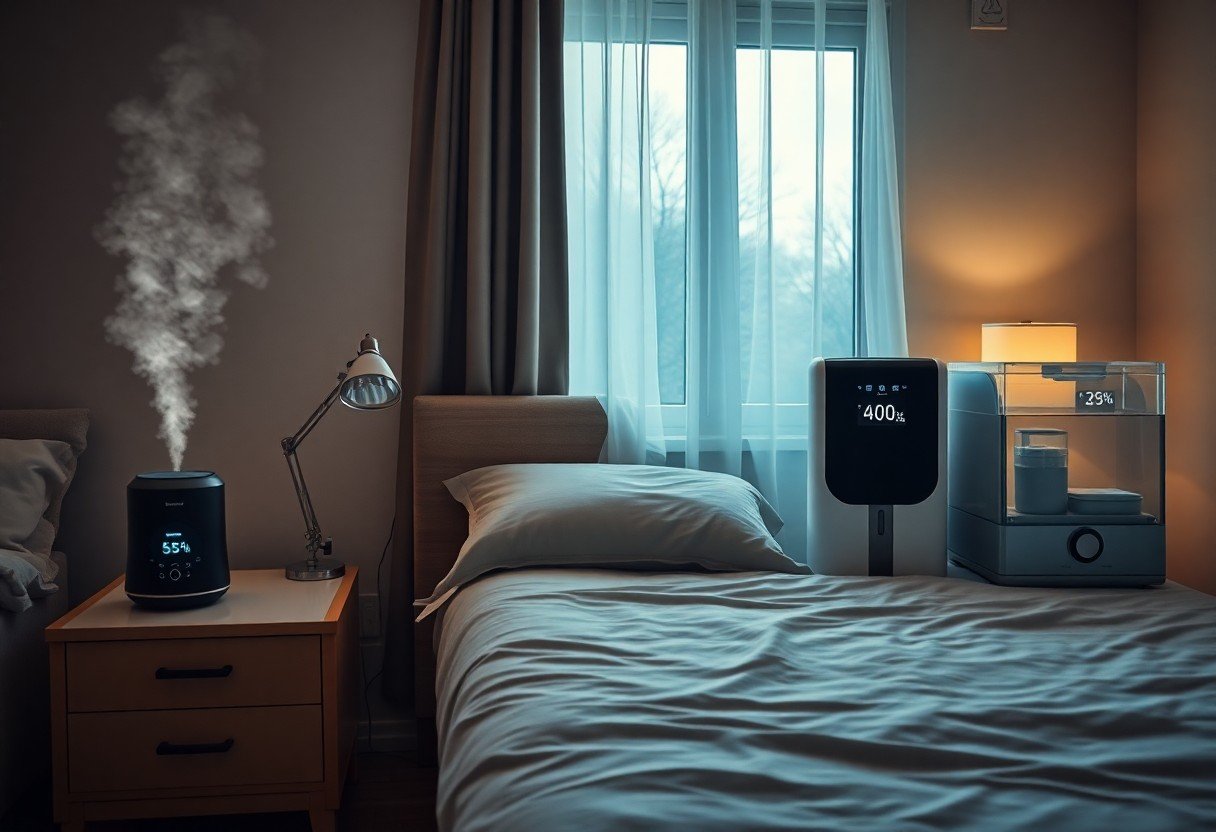
Humidifiers introduce water vapor into the air, counteracting the desiccating effect of heaters, air conditioners, and high-altitude climates. You’ll find several types on the market, from ultrasonic models that produce a cool, fine mist to evaporative units that use a fan and wick filter to release moisture gradually. Cool mist humidifiers are often safer around children, while warm mist versions can provide a soothing sensation during cold nights. Some units include built-in hygrometers, allowing you to monitor humidity without a separate device.
Placement matters: setting the humidifier too close to your bed may dampen pillows and sheets, encouraging mold if overused. You should position it at least three feet away, on an elevated surface for even dispersion. Regular cleaning is non-negotiable-stagnant water breeds bacteria and mold that get aerosolized with each use. A weekly rinse with vinegar and water keeps the tank sanitized without harsh chemicals. Units with antimicrobial filters add another layer of protection, though they require periodic replacement.
Over-humidifying poses risks just as serious as dry air. Relative humidity above 60% creates a breeding ground for dust mites and mold spores, which can trigger allergies and asthma. You’re aiming for a sweet spot between 40% and 50%, where respiratory comfort peaks without encouraging microbial growth. A portable humidifier in the bedroom can maintain this range effectively, especially in homes with centralized heating. Units like the Honeywell HCM-350 or the Levoit Classic 300S have earned consistent user praise for reliability and quiet operation.
Using a humidifier effectively means treating it as part of your nightly routine, not a set-and-forget appliance. You refill the tank with distilled water to prevent mineral dust from dispersing into the air. Tap water in hard water areas leaves white residue on furniture and walls, a visible sign of airborne particulates. Some models now include demineralization cartridges to reduce this effect. You also track performance by how you feel-less congestion, easier breathing, fewer nighttime awakenings-rather than relying solely on indicator lights or settings.
The Weight of the Damp
The Wet Sheet
Waking with hair stuck to your forehead or a clammy film across your back often signals excess moisture in the air. High humidity prevents sweat from evaporating efficiently, disrupting your body’s natural cooling during sleep. You may not fully wake, but your sleep cycles fragment, leaving you unrested despite sufficient hours in bed. A bedroom that feels stuffy, even at a comfortable temperature, is likely holding too much water vapor. Mold spores thrive in these conditions, particularly in corners or behind furniture, introducing allergens that irritate airways overnight. Condensation on windows by morning is a visible clue-your room is holding more moisture than it should.
Cool, damp sheets can trigger muscle tension, especially in cooler months when ambient temperatures drop but humidity stays high. Your body struggles to maintain thermal balance, shifting frequently without conscious awareness. Dust mites multiply rapidly in relative humidity above 60%, feeding on shed skin cells and worsening allergy symptoms. You might notice more sneezing or congestion upon waking, misattributing it to a cold rather than environmental factors. Older homes with poor ventilation often trap moisture from cooking, bathing, or laundry, compounding the issue over time.
Some resort to lowering the thermostat to counteract the sticky feeling, but this can lead to overcooling and increased energy costs. Running fans helps circulate air but does nothing to reduce moisture levels. Without addressing the root cause, discomfort persists night after night. Breathable bedding made from natural fibers like cotton or linen offers slight relief but cannot offset a consistently humid environment. The real solution lies in actively removing excess water from the air, not just masking its effects.
The Water Puller
Dehumidifiers work by drawing in moist air, cooling it to condense water vapor, then reheating and releasing drier air. The collected water accumulates in a tank or drains continuously via a hose. Units vary in capacity, with larger models suited for basements or humid climates. You’ll notice results within hours-walls feel less cool to the touch, fabrics dry faster, and the musty odor common in damp rooms begins to fade. Running one in your bedroom or adjacent space can significantly improve sleep quality by stabilizing the microclimate.
Models with built-in hygrometers allow you to set a target humidity level, typically between 40% and 50%, and the machine adjusts automatically. This prevents over-drying, which can be just as disruptive as excess moisture. Portable units are effective for single rooms, while whole-house systems integrate with HVAC setups in larger homes. Energy efficiency varies, so selecting an Energy Star-rated model reduces long-term costs without sacrificing performance. Maintenance involves emptying the tank regularly and cleaning the filter to prevent mold buildup inside the unit itself.
Noise levels differ across models, with many modern units operating at near-quiet levels suitable for nighttime use. Placing the dehumidifier slightly away from the bed minimizes any residual sound while maintaining airflow. Over time, reduced humidity protects not only your health but also your home’s structure, preventing peeling paint, warped wood, and hidden mold growth. A mid-sized SaaS firm operating out of a converted basement office reported fewer employee sick days after installing dehumidifiers, a real-world example of how air quality impacts well-being beyond sleep.
Some advanced dehumidifiers include Wi-Fi connectivity, allowing remote monitoring and control through a smartphone app. This feature proves useful when managing humidity in guest rooms or seasonal homes where conditions fluctuate. Smart sensors can detect spikes in moisture after a hot shower or rainy day and activate the unit accordingly. Filters with antimicrobial coatings add another layer of protection, reducing the spread of biological contaminants. While not imperative, these upgrades offer convenience for users seeking precise environmental control without manual intervention.
The Truth of the Gauge
The Measured Air
A hygrometer quietly tracks the invisible moisture in your bedroom, offering a clear number where guesswork once ruled. You might feel clammy or notice static shocks, but only a reading reveals whether the air is actually too dry or too saturated. Some modern humidifiers and dehumidifiers include built-in sensors, yet standalone hygrometers often provide more accurate, consistent feedback across different areas of the room. You can place one near your bed, away from direct airflow, to capture the conditions you actually experience at night. Units with digital displays update in real time, helping you correlate physical sensations with precise humidity levels. Over several nights, patterns emerge-perhaps your throat dries around 30% or your sheets feel sticky above 60%. These observations anchor your decisions in data, not discomfort.
Temperature interacts closely with humidity, altering how the air feels regardless of the gauge reading. A room at 68°F with 50% humidity feels more comfortable than the same level at 75°F, where moisture lingers on the skin. You need to consider both metrics when adjusting your device, especially in climates with wide diurnal swings. Smart thermostats paired with hygrometers can automate small corrections, maintaining balance without nightly intervention. Even without automation, recording daily readings alongside sleep quality creates a personal reference over time. You begin to anticipate changes before symptoms arise, adjusting the machine proactively as weather shifts outside.
Calibration matters more than most users realize, as inaccurate sensors lead to incorrect adjustments. A unit reading 10 percentage points off could push you toward over-humidifying or excessive drying, worsening the very issues you’re trying to fix. You can test accuracy using the salt test method, a simple home technique involving a sealed container and table salt. If the device doesn’t stabilize near 75% in that environment, it may need replacement. Older units, especially analog models, drift over time and should be cross-checked periodically. Trusting the gauge means verifying it first, ensuring every decision stems from reliable information.
The Perfect Number
Experts commonly cite 40% to 50% relative humidity as the ideal range for sleep, balancing moisture without encouraging mold or dust mites. You may find your personal sweet spot within this window, influenced by body chemistry, bedding materials, and room ventilation. A mid-sized SaaS firm’s sleep study tracker, for example, showed participants reported fewer nighttime awakenings when levels held steady in this band. Breathing feels easier, nasal passages stay lubricated, and skin doesn’t pull tight during the night. This range also limits the survival of airborne viruses, adding a layer of indirect health benefit. You don’t need perfection, but consistency within these bounds supports restorative rest.
Below 40%, mucous membranes dry, increasing irritation and snoring, especially in colder months when heating systems deplete indoor moisture. You might wake with a scratchy throat or notice increased static electricity disrupting your routine. Raising humidity slightly can alleviate these symptoms, but overshooting introduces new problems. Above 50%, condensation forms on windows, and dampness encourages dust mites and mildew-both potent allergens. You may not see mold immediately, but its presence can trigger congestion or wheezing over time. Staying within the target zone avoids these extremes, creating a stable environment night after night.
Individual health conditions can shift the ideal setting slightly. You might need closer to 45% if managing asthma, as lower levels can trigger bronchial irritation. Those with eczema often benefit from slightly higher humidity to prevent overnight skin cracking. Even bedding choices play a role-memory foam retains heat and moisture differently than cotton or wool, altering local microclimates. You can fine-tune based on how you feel upon waking, using the gauge as a guide rather than a rigid rule. The number isn’t universal, but the range provides a reliable starting point for adjustment.
Some high-end air purifiers now integrate hygrometers with adaptive humidification or dehumidification, automatically maintaining levels within the 40% to 50% window. You set the target once, and the system responds to real-time changes, reducing the need for manual oversight. These units often include filters that capture allergens released during moisture fluctuations, offering a layered defense. While not crucial, they simplify long-term control, especially in variable climates. You still benefit from occasional manual checks to confirm performance, but the daily burden decreases significantly. Automation supports consistency, which ultimately supports better sleep.
The Discipline of the Machine
Consistency in machine maintenance directly influences your nightly comfort. Running a humidifier in winter without cleaning it fosters mold spores that circulate with the mist, potentially aggravating respiratory conditions. You must treat the device not as a passive appliance but as an active participant in your sleep environment, requiring routine attention. A neglected tank becomes a breeding ground, undermining any benefit the moisture might offer.
Emptying the water reservoir daily prevents stagnation, especially if the unit isn’t used for more than a day. Residual water develops biofilm, a slippery layer of microorganisms invisible to the eye but potent in effect. Refilling with fresh, distilled water each time reduces mineral buildup and airborne white dust. This simple act disrupts microbial growth before it begins, preserving both machine function and air quality.
Operating on a schedule aligns machine performance with your body’s needs. Letting the humidifier run too long oversaturates the air, inviting dust mites and mildew. You gain nothing by leaving it on all night without monitoring. Instead, pair it with a hygrometer and set a timer to maintain levels between 30% and 50%. Precision in use transforms the machine from a convenience into a calibrated tool for rest.
The Clean Tank
Water left sitting in a humidifier tank for more than 12 hours begins to cultivate bacteria and mold. You introduce these contaminants into your breathing space with every mist cycle. Emptying the tank after each use is the first defense, but thorough cleaning is non-negotiable. A solution of white vinegar and water, circulated through the system weekly, dissolves deposits and sanitizes internal surfaces without harsh chemicals.
Hard water accelerates scale accumulation, particularly in ultrasonic models where mineral residue disperses as fine dust. This dust settles on furniture and enters your lungs, mimicking allergy symptoms. Rinsing the tank with clean water after every vinegar treatment ensures no acidic residue remains. Some manufacturers recommend periodic hydrogen peroxide rinses for deeper disinfection, especially in households with asthma sufferers.
Allowing components to air-dry completely before reassembly prevents trapped moisture from reigniting microbial growth. Damp corners in the base or cap become hidden reservoirs for pathogens. Placing parts on a clean towel in a well-ventilated area for several hours eliminates this risk. A dry machine at rest is a machine ready for safe, effective operation the next evening.
The New Filter
Filters in evaporative humidifiers lose efficiency as they absorb minerals and trap airborne particles. You may not notice the decline until output diminishes or an odor emerges. Most manufacturers suggest replacing the filter every one to three months, depending on usage and water hardness. A clogged filter forces the fan to work harder, increasing energy use and shortening the unit’s lifespan.
Using a generic or off-brand filter can compromise performance, as pore density and material quality vary. Genuine replacement filters are engineered to match the unit’s airflow and moisture dispersion rate. Substitutes may restrict air too much or allow unfiltered moisture into the room. You risk inconsistent humidity levels and potential overexposure to impurities when cutting corners here.
Some newer models feature washable filters, but these still require monthly deep cleaning and eventual replacement after a year. Soaking in a vinegar solution helps loosen mineral deposits, but repeated washing degrades the fibers over time. Even with diligent care, the filter’s capacity to wick water and block contaminants diminishes. Replacing it on schedule ensures the machine delivers clean, consistent mist without strain.
Inspecting the filter monthly gives you a visual cue for replacement timing. If the material appears darkened, stiff, or develops a musty smell despite cleaning, it’s past its functional life. A mid-sized SaaS firm with office-wide humidification reported fewer employee complaints about dry throat and sinus irritation after switching to a strict quarterly filter replacement policy, even in units with washable components. This real-world example underscores how proactive maintenance affects air quality and comfort.
The Turning of the Seasons
Seasonal shifts alter indoor air quality in ways that directly affect sleep quality and respiratory comfort. As winter approaches, cold outdoor air holds less moisture, and indoor heating systems further dry the air, often dropping relative humidity below 30%. You may notice static electricity, dry skin, or irritated nasal passages during these months, all signs that a humidifier could restore balance. A mid-sized SaaS firm with office-wide humidification reported fewer employee complaints of throat irritation during winter months, illustrating how environment shapes well-being.
Summer brings a different challenge, as warm air retains more moisture and humidity levels rise. Without intervention, indoor spaces can feel sticky and oppressive, creating ideal conditions for mold and dust mites. You might wake with congestion or a stuffy nose, not from illness but from prolonged exposure to damp air. Coastal homes often face this issue more acutely, where sea air saturates walls and bedding even with windows closed.
Adapting your bedroom environment means recognizing these seasonal patterns and adjusting equipment accordingly. Air quality isn’t static, and neither should be your approach to managing it.
The Winter Bone
Cold months extract moisture from the air, leaving indoor environments brittle and harsh. You may feel this in the form of cracked lips, sore throats upon waking, or even minor nosebleeds after several nights. These are not random discomforts but direct responses to low humidity levels, often exacerbated by forced-air heating systems that circulate parched air. Wood floors may creak more, and paint can develop fine cracks-your home shows signs of dryness too.
Running a humidifier introduces needed moisture, ideally raising indoor humidity to between 40% and 50%. You’ll notice softer breathing, reduced static, and a gentler feel to the air. Some users report deeper, more restful sleep once dryness is mitigated, especially those with mild asthma or allergies. A bedroom humidifier with a built-in hygrometer allows real-time monitoring, so adjustments happen before discomfort sets in.
Over-humidifying remains a risk, as excess moisture invites mold or dust mites. You must strike a balance-enough to soothe, not so much that surfaces grow damp. Emptying and cleaning the tank daily prevents bacterial buildup, a small effort for consistent comfort.
The Summer Swamp
High humidity in summer transforms bedrooms into muggy, uncomfortable spaces where sweat lingers and sleep becomes fitful. You may wake feeling sticky, even if the thermostat reads a reasonable temperature. Warm, moist air reduces the body’s ability to cool through evaporation, disrupting the natural thermoregulation that supports deep sleep cycles. In humid climates, indoor relative humidity can climb above 60%, creating an environment where mold thrives and bedding feels perpetually damp.
A dehumid游戏副本
Summing up
Humidifiers add moisture to dry indoor air, which often occurs during winter months or in air-conditioned environments, helping prevent irritated nasal passages and dry throat that can disrupt sleep. You may notice fewer nighttime coughs and less morning discomfort when using a humidifier in an arid bedroom, especially if you live in a cold climate or at higher elevations where indoor air tends to parch. A mid-sized SaaS firm employee working late in a heated home office might benefit from a cool mist humidifier near the bed to maintain consistent air quality through the night.
Dehumidifiers, in contrast, remove excess moisture and are most effective in damp climates or humid basements where mold and dust mites thrive. You are more likely to sleep soundly in a room where humidity stays below 50%, reducing allergens and that sticky, heavy feeling in the air. Coastal residents or those in regions with prolonged rainy seasons often report deeper, less interrupted rest after introducing a dehumidifier to their bedroom.
Your choice depends on your local environment and physical responses, not trends or generic advice. A hygrometer helps you decide objectively, showing whether your room leans too dry or too damp. You maintain control by adjusting based on measurable conditions, not guesswork. One person in Denver may rely on a humidifier year-round, while someone in Charleston may run a dehumidifier most nights.