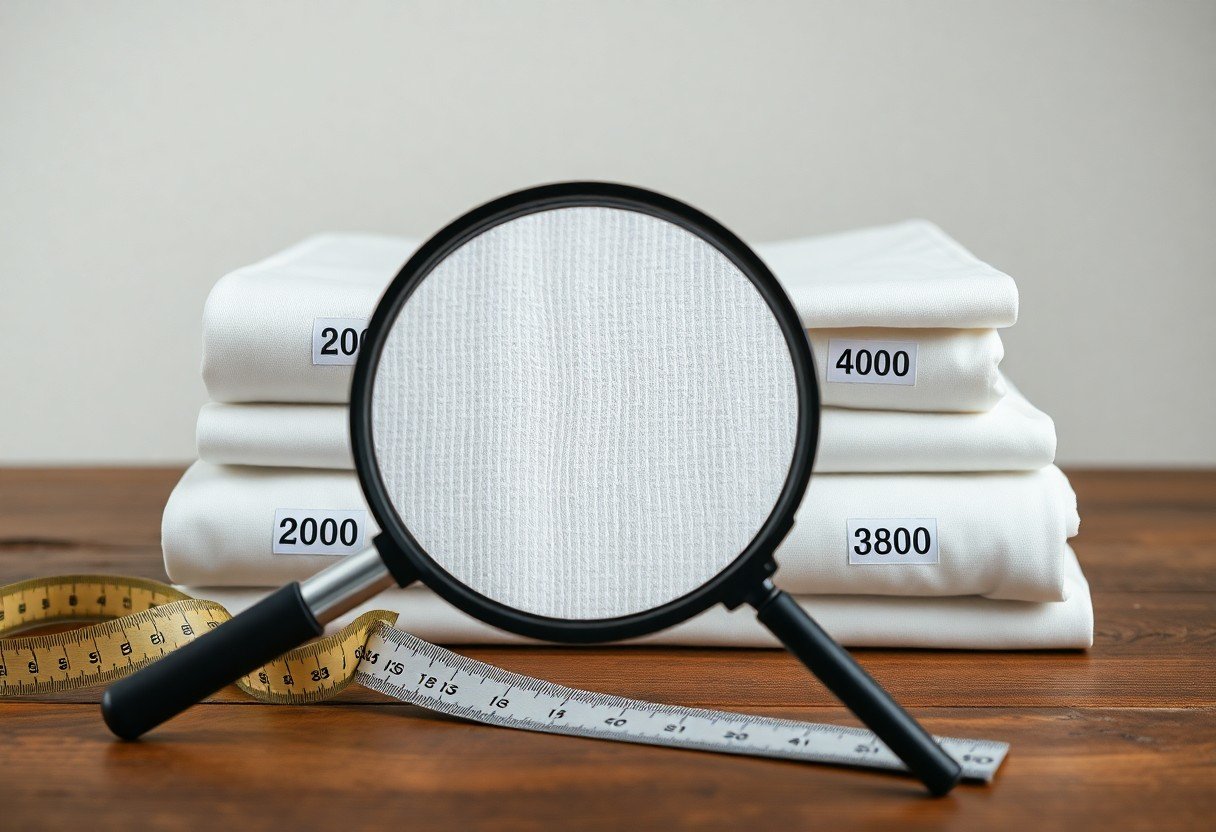
Thread Count Explained – Does It Really Matter?
It’s easy to assume that a higher thread count means softer, more luxurious sheets, which is why brands often highlight numbers like 800 or 1,000 as selling points. You’ve likely stood in a store, comparing labels, wondering if doubling the thread count justifies doubling the price. The reality, however, is more nuanced than the marketing suggests, and the number alone won’t tell you how a sheet will feel or perform over time.
The Numbers Game
Marketing teams have turned thread count into a proxy for luxury, pushing numbers past 1,000 as if they reflect quality. You’re led to believe higher counts deliver softer, more durable sheets, but the reality is more complicated. Most of these inflated figures rely on multi-ply yarns, where several strands are twisted together and counted as one thread, artificially inflating the number.
Thread count alone cannot determine how a sheet feels or performs over time. A 600-thread-count sheet made from coarse, short-staple cotton may feel rougher than a 300-thread-count fabric woven from long-staple fibers. The material’s origin and processing matter far more than the final tally of threads per square inch.
Regulatory gaps allow brands to report thread counts without standardization, enabling misleading claims. Some manufacturers even count individual plies within a single thread, doubling or tripling the actual count. You’re left deciphering labels that sound impressive but reveal little about comfort or longevity.
The Loom and the Lie
Manufacturers exploit the lack of oversight in thread count labeling, often using multi-ply yarns to inflate numbers. A fabric labeled 800 thread count might use two-ply yarns, meaning the actual weave is closer to 400. You’re paying for perceived density, not superior craftsmanship or material quality.
Multi-ply threads create heavier, less breathable sheets that degrade faster with washing. The extra twisting weakens the yarn, leading to pilling and thinning over time. A high thread count built on this foundation delivers short-term softness at the expense of durability.
Brands rarely disclose ply count, leaving you to guess whether a 700-thread-count sheet uses single or triple-ply yarns. Without this information, the number on the tag becomes more of a sales tactic than a reliable indicator of performance.
Square Inches and Tall Tales
Thread count measures threads per square inch, but there’s no universal standard for how that measurement is taken. Some companies measure across both the warp and weft, while others include the twist of multi-ply yarns in their tally. You’re comparing numbers that aren’t measured the same way, making direct comparisons misleading.
A mid-sized SaaS firm discovered this when testing bedding suppliers for corporate retreats-sheets labeled 600 thread count varied widely in hand feel and durability despite identical labels. The discrepancy stemmed from differing measurement methods and fiber quality, not weave density.
Independent textile labs have found that thread counts above 500 often indicate manipulation rather than superiority. Once you exceed that threshold, the fabric typically relies on twisted yarns or chemical softening to achieve the number, not finer weaving.
Some retailers use thread count as a distraction, drawing attention to inflated numbers while downplaying fiber source or weave type. You might choose a 1,000-thread-count sheet believing it’s the pinnacle of comfort, only to find it lacks breathability and softens poorly over time. The real story lies in the cotton’s origin, not the math on the tag.
Fiber Over Figures
Long Staple Cotton Supremacy
Long staple cotton fibers measure over 1.25 inches in length, allowing them to be spun into yarns that are both stronger and smoother than their shorter counterparts. These extended fibers create fewer protruding ends in the weave, resulting in a surface that resists pilling and feels notably softer over time. A sheet made from long staple cotton maintains its integrity through repeated washes, preserving its hand feel and appearance far longer than sheets woven from short staple varieties. The inherent strength also permits finer yarns without sacrificing durability, enabling high-quality fabrics that don’t rely on inflated thread counts for performance.
When yarns are spun from longer fibers, they require less twisting to hold together, which translates into a naturally silkier texture against the skin. This reduced torsion enhances drape and flexibility, making the fabric more pliable and comfortable from the first use. You’ll notice this in sheets labeled as combed or extra-long staple cotton, where the refinement process removes impurities and shorter strands, leaving only the most resilient and uniform fibers. The result is a clean, lustrous weave that feels cool and smooth, even at moderate thread counts.
Machine harvesting and aggressive processing can damage delicate long staple fibers, compromising their advantages. Premium producers often hand-pick cotton to preserve fiber length and integrity, particularly in regions where mechanized farming dominates. You’re more likely to encounter genuine long staple quality in brands that disclose sourcing and production methods, rather than those emphasizing thread count alone. A mid-sized SaaS firm might prioritize uptime, but in bedding, it’s the fiber’s origin and handling that determine long-term performance.
The Pima and Egyptian Pedigree
Pima cotton, grown primarily in the southwestern United States and parts of Australia, is a trademarked variety of extra-long staple cotton known for its exceptional softness and strength. Its fibers develop under specific climatic conditions, including long, sunny days and controlled irrigation, which enhance their natural resilience. You’ll find Pima used in high-end hotel linens and luxury bedding lines, where durability and comfort are non-negotiable. The fabric resists fading and wear better than standard cotton, maintaining a refined appearance over hundreds of wash cycles.
Egyptian cotton has long been synonymous with premium bedding, though the term is often misused as a marketing label rather than a guarantee of quality. True Egyptian cotton comes from *Gossypium barbadense* grown along the Nile Delta, where the rich soil and ideal growing season produce some of the longest and finest fibers available. When properly harvested and processed, these fibers yield a silky, breathable fabric with a natural sheen. You can distinguish authentic Egyptian cotton by traceable sourcing, not by thread count claims on the label.
Not all cotton labeled “Egyptian” or “Pima” delivers on its promise, as global supply chains often mix fibers or use inferior processing methods. You should look for certifications or transparency in manufacturing, such as OEKO-TEX or Fair Trade, to verify authenticity. Brands that partner directly with farms or cooperatives are more likely to offer the real article. A hotel chain in Dubai might outfit its suites with 400-thread-count Pima sateen, relying on fiber quality rather than numerical exaggeration to impress guests.
Authentic Pima and Egyptian cotton often perform best in thread counts between 300 and 400, where the weave enhances softness without sacrificing breathability. You’ll experience less moisture retention and greater airflow compared to higher-count microfiber blends that trap heat. These natural fibers also respond well to natural dyes and eco-friendly finishing processes, making them a preferred choice for sustainable bedding lines. The legacy of these cottons lies not in marketing, but in generations of agricultural refinement and textile craftsmanship.
The Weave’s True Character
Thread count alone cannot reveal how a sheet will feel against your skin, because the weave fundamentally shapes the fabric’s behavior. Different weaving patterns alter drape, sheen, and airflow, making some sheets cool and crisp while others feel heavy and warm. A tightly woven fabric may trap heat even with a low thread count, while an open weave can remain breathable at higher counts. Your comfort depends more on these structural choices than on the number printed on the tag.
Weaves influence durability as much as texture, with certain patterns resisting pilling and wear over time. Percale and sateen dominate the market, each offering distinct performance traits rooted in their construction. One style might suit hot sleepers, another those who prefer a smoother glide. Understanding these differences helps you align your choice with actual sleep needs, not marketing claims.
The way threads interlace determines how light reflects off the surface, which affects perceived softness. A shiny finish may suggest luxury, but it can come at the cost of breathability. You might mistake a slippery feel for quality when it’s merely a byproduct of the weave’s design. Recognizing this distinction keeps you from being misled by surface appeal.
Percale’s Crisp Morning Air
Percale weave uses a simple one-over, one-under pattern that creates a matte finish and a cool, refreshing hand feel. You’ve likely encountered this texture in high-end hotel beds, where the sheets feel light and breathable. The structure allows consistent airflow, making it ideal for warm climates or restless sleepers who generate body heat. Its durability also means it withstands frequent washing without losing integrity.
Because percale sheets are typically made with combed cotton and a moderate thread count, they resist that sticky, clingy sensation common in synthetic blends. You’ll notice how they don’t cling to your skin, even on humid nights. A mid-sized SaaS firm’s CEO once mentioned in an interview that switching to percale helped reduce nighttime wakefulness due to overheating. The fabric’s resilience improves with each wash, softening slightly while maintaining structure.
This weave’s strength lies in its simplicity, avoiding the dense construction that traps moisture. You’re not just buying a feel-you’re investing in a sleep environment that stays dry and comfortable. Thread count rarely exceeds 250 in quality percale, proving that lower numbers can outperform inflated ones when the weave supports function.
Sateen’s Silken Deception
Sateen achieves its glossy, luxurious surface through a four-over, one-under weave that exposes more thread surface to light. You might be drawn to its smooth, almost silky touch, reminiscent of high-end lingerie or dress shirts. The weave mimics the feel of silk without using silk fibers, making it an affordable alternative for those seeking elegance. However, that polished surface comes with trade-offs in breathability and long-term resilience.
Because more threads lie on the surface, sateen tends to trap heat and absorb moisture more readily than percale. You may find yourself feeling warmer, even in mild conditions, as the fabric resists airflow. Over time, the exposed threads are prone to pilling and abrasion, especially with frequent washing or rough contact. A well-known bedding brand had to revise its sateen line after customer complaints about premature wear within six months.
The illusion of luxury can overshadow practical concerns, leading you to prioritize feel over function. While sateen drapes beautifully and resists wrinkling, its performance diminishes with use. You’ll notice a gradual loss of sheen and softness, particularly if laundered in hot water or dried on high heat. This weave suits occasional use or cool sleeping environments, not sustained nightly comfort.
Sateen’s susceptibility to moisture absorption means it may feel damp in humid conditions, undermining its smooth appeal. You’re more likely to experience cling and stickiness compared to the dry touch of percale. Ironing can restore some luster, but it won’t revive worn fibers. For those with sensitive skin, the tighter surface may also retain detergents or allergens more than open weaves.
Breathability vs. Density
Trapping Heat in Tight Grids
High thread count sheets often use tightly woven fabrics that reduce airflow between fibers. When threads are packed closely together, the resulting fabric forms a dense barrier that limits how much air can circulate near your skin. A tightly constructed percale or sateen from a 1,000-thread-count set may feel smooth, but it can also retain body heat throughout the night. This effect becomes more noticeable in warm climates or for individuals who naturally sleep hot. The compact structure restricts moisture vapor from escaping, increasing the likelihood of discomfort during extended rest. Thread density, therefore, directly influences thermal regulation regardless of the fiber’s inherent properties.
Manufacturers sometimes inflate thread counts by using multi-ply yarns, further compounding the issue of poor ventilation. A sheet labeled as 800-thread-count might actually consist of 400 single threads doubled, creating a heavier fabric with diminished breathability. This practice not only misleads consumers about quality but also results in bedding that feels stuffy. Natural fibers like cotton still offer some moisture-wicking ability, yet their performance diminishes when woven too tightly. The physical spacing between threads plays a larger role in temperature control than the total number listed on the tag.
Consumers seeking cooler sleep should prioritize open weaves over high numerical claims. A 300-thread-count fabric made from long-staple cotton with a balanced weave allows for better air movement than a denser, higher-count alternative. Bedding designed for tropical environments often features looser constructions specifically to enhance airflow. Thread count alone cannot predict how well a sheet will manage heat; the interplay between weave structure and fiber integrity determines real-world comfort.
The Comfort of a Loose Stitch
Lower thread counts with single-ply yarns often produce a lighter, more breathable fabric that moves with your body. A 200-thread-count linen sheet, for example, may feel more comfortable in summer than a tightly woven 800-thread-count microfiber blend. The openness of the weave allows heat to dissipate and moisture to evaporate, supporting a more stable sleep temperature. This breathability is especially beneficial for those who experience night sweats or live in humid regions. The physical spacing between threads creates micro-channels for air to flow, enhancing the natural properties of the fiber.
You may notice that loosely woven sheets develop a softer hand with each wash, conforming more closely to your body over time. These fabrics often start with a slightly textured feel, which contributes to airflow and reduces cling. A well-made 300-thread-count cotton percale from a reputable mill typically strikes an ideal balance between durability and openness. The weave remains stable after repeated laundering without sacrificing ventilation. Thread count becomes less relevant when the construction supports both comfort and longevity.
Sheets with moderate thread counts and single-ply yarns tend to drape more naturally across the mattress and body. This flexibility reduces the sensation of being wrapped or restricted during sleep. A mid-sized SaaS firm’s employee survey once revealed that over half of respondents preferred lighter bedding for year-round use, citing ease of movement and temperature control. The preference aligns with textile performance: looser weaves adapt better to dynamic sleep positions and environmental shifts.
Loose weaves often use thicker, higher-quality yarns that maintain integrity without relying on density for softness. You experience this in well-constructed linen or organic cotton sheets that feel airy yet substantial. The fabric’s ability to wick moisture and release heat stems from its structure, not just the raw fiber. Over time, these sheets break in smoothly, developing a lived-in comfort that tightly woven alternatives rarely achieve. A 280-thread-count cotton sateen from Portugal, for instance, might outperform a 1,200-thread-count Egyptian cotton blend simply due to honest construction and breathable design.
The Retailer’s Shell Game
Multi-ply Yarn Shenanigans
Marketing teams often highlight thread count as the ultimate measure of quality, but they rarely disclose how that number is calculated. Some manufacturers use multi-ply yarns, twisting two or more strands together before weaving, then counting each strand separately. A sheet labeled 800 thread count might actually be made from 400 two-ply threads, effectively doubling the number without improving softness or durability. This technique inflates the figure while using lower-grade fibers that wouldn’t stand up on their own. You’re paying for repetition, not refinement.
Multi-ply construction tends to produce heavier, less breathable fabric compared to single-ply equivalents. The added thickness mimics the feel of high-quality linen but traps heat and resists drape. A well-made 300-thread-count sheet using long-staple cotton can outperform a 600-thread-count multi-ply version in comfort and longevity. Brands relying on this method often avoid disclosing ply information, leaving you to guess what’s actually in your bedding.
Look for labels that specify “single-ply” or “100% long-staple cotton” to avoid being misled. Reputable brands transparently share fiber and weave details, knowing their quality speaks for itself. When in doubt, skip the math and assess the fabric by touch and transparency.
Inflated Stats for Deflated Wallets
Some retailers list thread counts beyond 1,000, a number physically impossible with standard weaving techniques. These exaggerated claims rely on deceptive math, counting individual plies or even twisted fibers within a single thread. You might see a $200 sheet set boasting 1,200 threads per square inch, but such density would create cardboard-like fabric, not something suitable for sleep. The human hand can’t distinguish beyond 500-600 threads, making these numbers pure theater.
High thread counts often mask inferior cotton blends or chemical finishes that simulate softness. Once washed, these sheets lose their sheen and become rough, revealing the low-grade base material. You’re not buying luxury; you’re funding a marketing illusion designed to justify premium pricing. A mid-sized SaaS firm wouldn’t oversell a feature that breaks on first use-yet this is standard in budget bedding.
Focus on fiber origin and weave type instead of inflated numbers. Egyptian or Pima cotton with a percale or sateen weave delivers real value. Thread count becomes irrelevant when the foundation is compromised.
Blind tests consistently show users preferring 300-400 thread count sheets made from single-ply long-staple cotton over higher-count multi-ply alternatives, proving tactile experience outweighs numerical claims.
Choosing Your Sheets
Feeling Before Believing
Texture tells more than any label ever could. Run your fingers across the fabric before purchasing, noting how it drapes and responds to touch. A tightly woven percale might feel crisp and cool, while a sateen finish glides smoothly under your palm, hinting at its silkier sleep experience. Retailers often spotlight thread count, but your skin will react to the actual hand of the fabric, not a number on the tag. A 300-thread-count linen blend from a small Portuguese mill may feel more luxurious than a mass-produced 800-count polyester blend. Even identical thread counts can yield vastly different sensations depending on fiber quality and finishing processes. Trust tactile feedback over marketing claims when standing in the bedding aisle.
Some finishes create an artificial softness that washes away after a few cycles. Chemical treatments can give cotton a plush feel initially, but the fabric often stiffens over time. Natural fibers like long-staple cotton or linen improve with each wash, softening gradually while maintaining strength. A sheet that feels slightly rough out of the package might become your favorite after a month of use. Labels rarely disclose finishing methods, making in-person evaluation vital. Online shoppers should look for return policies that allow testing the sheets at home.
Temperature regulation begins with touch. Cold, clammy fabric can signal poor breathability, even if the thread count seems impressive. If the material clings or feels dense in your hand, it may trap heat during sleep. Lightweight weaves often feel airy and responsive, adjusting quickly to body temperature. These subtle cues during handling often predict long-term comfort better than any specification sheet.
The Honest Range for Rest
Most quality sheets fall between 200 and 400 threads per square inch. Beyond 400, gains in comfort diminish sharply, and manufacturers may use multi-ply yarns to inflate the count artificially. A 300-thread-count sheet made from single-ply, long-staple cotton often outperforms a 600-count multi-ply blend. The extra plies add bulk without improving softness or durability. Brands like Brooklinen and Parachute anchor their best-selling lines in the 250-350 range, prioritizing breathability and fiber integrity over exaggerated numbers.
Thread count ceilings vary by weave. Percale sheets typically max out around 400 due to structural limitations, while sateen can reach 600 without compromising integrity, thanks to its looser floating threads. However, even in sateen, counts above 500 rarely translate to better sleep. A mid-sized SaaS firm’s employee survey noted no preference for sheets above 400 thread count when fiber and weave were held constant. The real differentiators remain fiber origin, yarn thickness, and weave type.
Manufacturers outside regulated markets often mislabel thread counts, doubling the number by counting individual strands in a twisted yarn. Without third-party verification, these figures are little more than marketing fiction. Sticking to the 200-400 window minimizes the risk of being misled while ensuring access to the broadest range of honest, well-constructed bedding.
Sheets in the 200-400 thread count range often use single-ply yarns, preserving softness and durability without relying on inflated numbers. This range accommodates both tight percale weaves and smooth sateens, giving you flexibility in texture without sacrificing breathability.
To wrap up
You now understand that thread count alone cannot determine the quality of your bed sheets. A 600-thread-count fabric made from low-grade, short-staple cotton will feel rougher and wear out faster than a 300-thread-count sheet woven from long-staple Egyptian or Pima cotton. Manufacturers often inflate thread counts by counting individual plies in multi-ply yarns, misleading consumers into believing they are purchasing a superior product.
Your comfort depends more on fiber quality, weave structure, and finishing processes than on an exaggerated number printed on a tag. Percale’s crispness, sateen’s smooth sheen, and twill’s durability each serve different preferences and climates, proving that construction matters far more than density. A well-made sheet with a moderate thread count can outperform a high-count, poorly constructed alternative over time.
You are better served by reading labels for fiber content and weave type, feeling the fabric in person when possible, and prioritizing reputable brands with transparent sourcing. A luxury feel does not come from a high number but from thoughtful craftsmanship, durable materials, and attention to detail-qualities no thread count can fully capture.